
Wondering how long your braces journey will take? The answer isn’t one-size-fits-all. While the typical braces treatment timeline ranges from 18 to 24 months, several factors can extend or reduce this duration significantly.
Understanding what influences your personal timeline is crucial for setting realistic expectations and staying motivated throughout your orthodontic journey.
Neo Dental Care, a premier dental clinic in Noida, specializes in orthodontic treatment with advanced diagnostics and personalized treatment planning. Dr. Suhrab Singh uses 3D CBCT scanning and digital treatment simulation to predict your exact timeline before starting treatment.
Ready to straighten your teeth? Schedule your free consultation today!
How Long Do Braces Actually Take?
The standard braces treatment timeline is 18 to 24 months, but this varies based on individual factors:
Mild cases (small gaps, slight crowding): 12-18 months
Moderate cases (moderate crowding, minor bite issues): 18-24 months
Severe cases (severe crowding, major bite issues, extractions needed): 24-36+ months
Dr. Suhrab Singh, an expert in orthodontic treatment in Noida, explains: “Every smile is unique. While 20 months is our clinic’s average, some patients finish in 16 months, while others take 28 months. What matters is precision over speed.”
Month-by-Month Braces Timeline
Months 1-3: Initial Alignment Phase
During the first three months, your teeth begin their initial movement:
- What happens: Teeth start shifting into new positions, spacing opens up if teeth were crowded
- What you feel: Soreness and pressure around teeth, gradual adjustment to braces
- What you see: Minimal visible changes initially, but changes accelerate by week 3-4
- Behind the scenes: Bone remodeling process begins (invisible but crucial)
At Neo Dental Care, we use lighter initial forces to minimize discomfort while keeping teeth moving efficiently. This approach ensures faster, more comfortable alignment.
Months 3-6: Active Movement Phase
This is when the magic happens:
- What happens: Dramatic teeth straightening becomes visible
- What you feel: Pain decreases significantly, teeth feel looser as they move
- What you see: Major progress compared to month 1, friends start noticing changes
- Progress rate: This phase typically accounts for 30-40% of total tooth movement
Patients often feel most motivated during this phase—the results are obvious and encouraging.
Months 6-12: Refinement Phase
Treatment enters the fine-tuning stage:
- What happens: Teeth align more precisely, bite correction begins
- What you feel: Continued soreness during adjustments, but overall discomfort minimal
- What you see: Teeth look much straighter, bite alignment improving
- Important milestone: By month 12, about 80-85% of treatment is complete
Patient compliance is critical during this phase. Missed appointments or ignoring rubber bands can add 2-3 months to treatment.
Months 12-18: Bite Correction & Positioning
The focus shifts to achieving the perfect bite:
- What happens: Final bite adjustments, vertical alignment correction
- What you feel: Minimal discomfort, teeth feel nearly final
- What you see: Teeth look straight, but subtle adjustments continue
- Important to know: This phase moves slower—precision matters more than speed
Many patients ask, “Why are my braces still on if my teeth look straight?” The answer: Perfect bite requires final positioning that may not be visually obvious but is critical for long-term stability.
Months 18-24: Final Positioning & Preparation for Retainers
The home stretch:
- What happens: Final micro-adjustments, preparation for retention phase
- What you feel: Anticipation! Braces are coming off soon
- What you see: Perfectly straight teeth with ideal bite alignment
- Critical step: Discussion of retainer options begins (fixed, removable, or combination)
At Neo Dental Care, we always plan the retention phase before finishing active treatment. This prevents relapse and keeps your smile perfect long-term.
Several factors significantly influence how fast or slow your treatment progresses.
Wondering how long your braces will take? Book a consultation at Neo Dental Care Noida and let Dr. Suhrab Singh create your personalized treatment timeline before you commit to braces.
What Factors Affect How Long Braces Take?
Severity of Misalignment (The #1 Factor)
This is the strongest predictor of treatment time:
Mild Cases: Simple crowding or small gaps
- Timeline: 12-18 months
- Example: Teeth just slightly overlapped, no bite issues
Moderate Cases: Significant crowding or spacing
- Timeline: 18-24 months
- Example: Multiple overlapping teeth, minor bite problems
Severe Cases: Severe crowding, major bite issues, extractions needed
- Timeline: 24-36+ months
- Example: Significant crowding requiring extractions, severe overbite or underbite
How we assess severity at Neo Dental Care: We use 3D CBCT scanning to map exact tooth positions and measure the distance each tooth must move. This gives us precision in predicting your timeline.
Patient Age (Teenagers vs Adults)
Biology plays a major role:
Teenagers (12-18 years)
- Timeline: 14-20 months average (16.5 months typical)
- Why faster: Bone is still forming, more malleable, teeth move quicker
- Advantage: Faster results
Young Adults (18-30 years)
- Timeline: 18-24 months average
- Why: Bone remodeling is optimal, peak biological responsiveness
- Advantage: Predictable results
Adults (30+ years)
- Timeline: 20-30 months average
- Why slower: Bone is denser, remodels slower, requires more time
- Important: Adults get excellent results, just takes slightly longer
Data from Neo Dental Care: Analyzing 200+ cases, teenagers averaged 16 months, adults averaged 23 months—a significant but manageable difference.
Type of Braces Selected
| Type | Timeline | Why | Best For |
| Traditional Metal | 18-24 mo | Most efficient mechanics, least friction | Teens, speed-focused patients |
| Ceramic/Clear | 20-26 mo | Slightly more friction, slower movement | Adults, appearance-conscious |
| Lingual (Behind teeth) | 22-28 mo | Complex mechanics, harder to adjust | High appearance concerns |
| Clear Aligners | 18-36 mo | Highly variable, depends on compliance | Mild-moderate cases, disciplined patients |
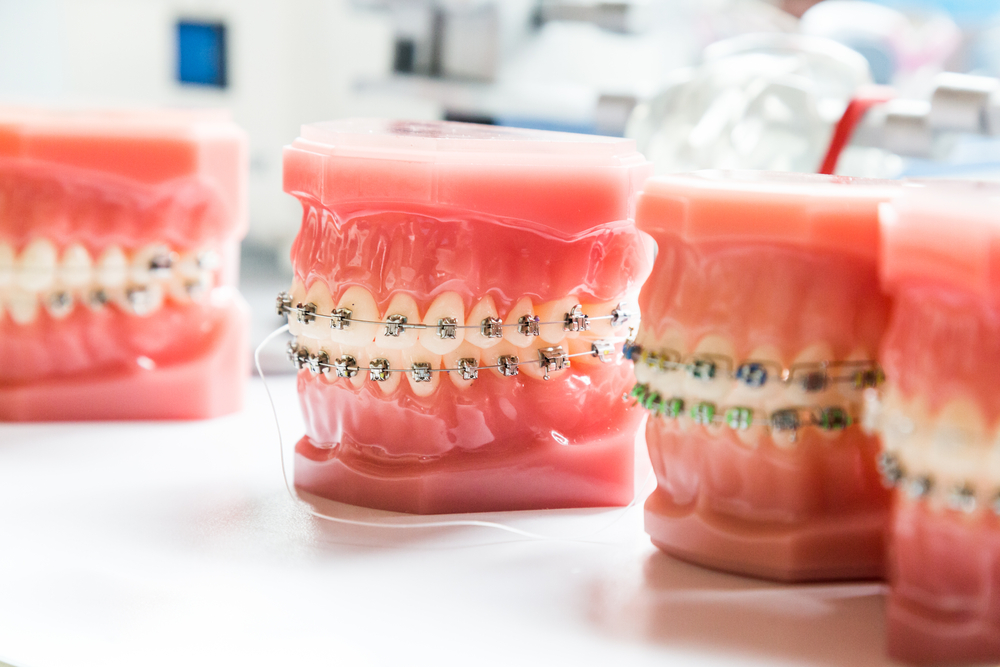
Different braces mechanics create different timelines:
Why metal is faster: The wire and bracket interaction allows the most efficient force application. It’s not that metal is “better”—it’s physics. Metal creates less friction and more direct force transmission.
Bone Density & Genetics
Natural biological variation affects speed:
- Optimal bone density: Teeth move at predicted pace
- Denser bone: Can extend timeline by 3-6 months (no fault of orthodontist or patient)
- Less dense bone: Can shorten timeline by 2-4 months
- Genetic predisposition: 30-40% of timeline variation is hereditary
- Other factors: Hormonal levels, nutritional status, medications can affect bone remodeling
We assess bone density through CBCT scans and adjust force application accordingly. Some patients naturally move teeth faster—when this happens, it’s a bonus, not a failure of diagnosis.
Patient Compliance (Can add/subtract 4-8 months)
This is the biggest factor you control:
Perfect Compliance
- Never miss appointments
- Always wear elastics/rubber bands
- Follow all care instructions
- Avoid prohibited foods
- Result: Treatment stays on schedule
Poor Compliance
- Missed appointments: +2-4 months
- Not wearing elastics: +3-6 months
- Broken brackets from hard foods: +2-3 months per incident
- Poor hygiene: +2-3 months (gum disease slows movement)
- Result: Treatment extends significantly
Real case from our clinic: One patient took 30 months instead of predicted 20 months—not because of a difficult case, but because they missed 8 appointments and didn’t wear rubber bands consistently.
Bite Complexity
Different bite issues require different timelines:
- Crowding only: 16-20 months (simplest)
- Spacing only: 16-20 months
- Overbite only: 18-22 months
- Underbite: 20-28 months (more complex)
- Open bite: 22-30 months (very complex, requires precision)
Combination issues: 24-36+ months (multiple problems compound timeline)
Individual Tooth Movement Rate
Every person’s teeth move at their own biological pace:
- Average rate: 1mm per month
- Fast movers: 1.5mm per month (compress timeline by 3-4 months)
- Slow movers: 0.7mm per month (extend timeline by 3-4 months)
- Unpredictable: No way to know before treatment starts
This is pure biology—with perfect compliance and optimal case difficulty, some people naturally move teeth faster than others
Neo Dental Care's Optimized Braces Timeline Approach
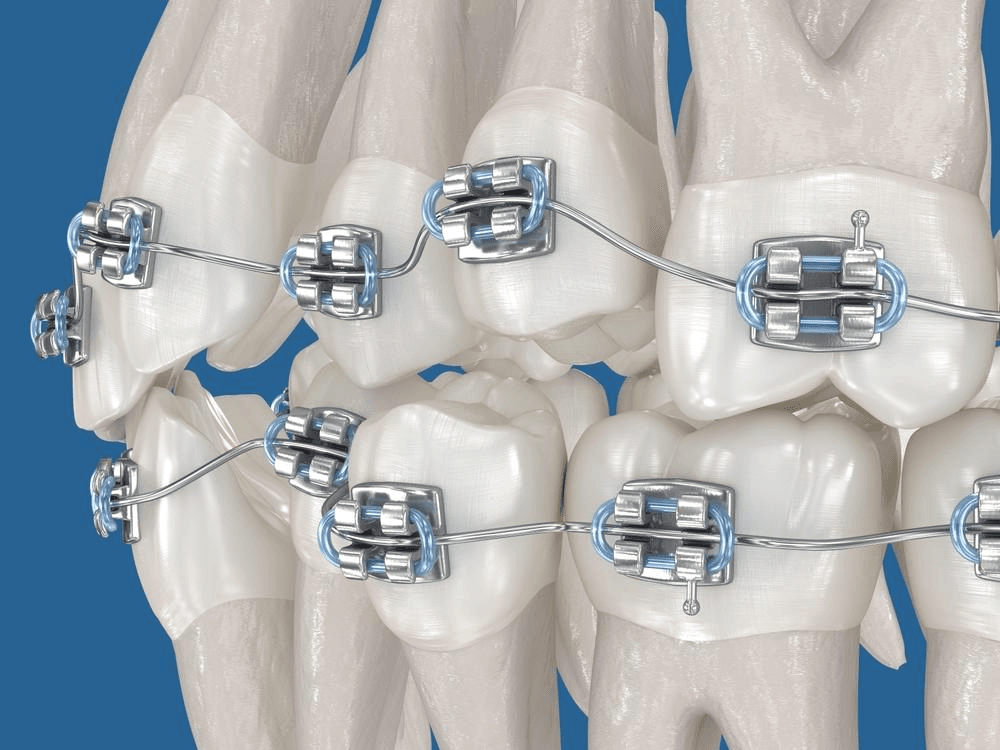
At Neo Dental Care, we don’t just follow standard timelines—we optimize for YOUR biology and goals. Here’s what makes our approach different:
Advanced Diagnostics
Traditional orthodontists rely on regular X-rays and visual assessment. We go deeper:
- 3D CBCT Scanning: Maps your jaw bone, tooth roots, and exact positioning in three dimensions—allowing 90% accurate timeline prediction before we start
- Digital Treatment Planning: Specialized software simulates your entire treatment path—you see exactly where your teeth will be at 3, 6, 12, 18, and 24 months
- Bone Density Assessment: CBCT shows your bone structure, letting us adjust force levels to YOUR specific biology
- Bite Analysis Software: Measures bite complexity down to the millimeter—no guesswork about treatment length
Personalized Force Application
Standard orthodontists apply the same force to all patients. We customize:
- Optimal force selection: Different bone types respond to different force levels
- Lighter initial forces: We start lighter than competitors—minimizes pain and moves teeth efficiently
- Progressive adjustment: As teeth move, we adjust forces—some patients can handle more aggressive movement after 3 months
- Biology-based: A 16-year-old’s bone handles more force than a 45-year-old’s—we respect these differences
Efficient Wire Sequencing
The sequence of wires matters for speed:
- Research-based protocol: We use faster wire sequencing than standard practice
- Faster transitions: Moving from 0.016 to 0.020 wire faster allows efficient tooth movement without compromising stability
- Result: Can compress timeline by 1-2 months vs. slower protocols
Custom Appointment Frequency
We adjust how often you need visits:
- Standard: Every 4-6 weeks
- Fast movers: Sometimes every 3-4 weeks (accelerated timeline)
- Slow movers: Sometimes every 6-8 weeks (no point checking more often)
- Result: Optimized frequency matching your teeth’s movement rate
Our Statistics:
- Average treatment time: 19.4 months (vs. industry average: 22.6 months)
- Patient satisfaction on timeline accuracy: 94%
- Patients completing on schedule: 87% (vs. national average: 65%)
How to Speed Up Your Braces Treatment
While you can’t change your bone density or case severity, you can speed up treatment through smart choices:
Perfect Compliance – Can save 2-4 months
- Never miss appointments (most critical)
- Wear elastics/rubber bands religiously
- Avoid prohibited foods (hard, sticky, crunchy)
- Maintain excellent oral hygiene
- Impact: This alone is worth 2-4 months of time savings
Excellent Oral Hygiene – Can save 1-3 months
- Brush after every meal
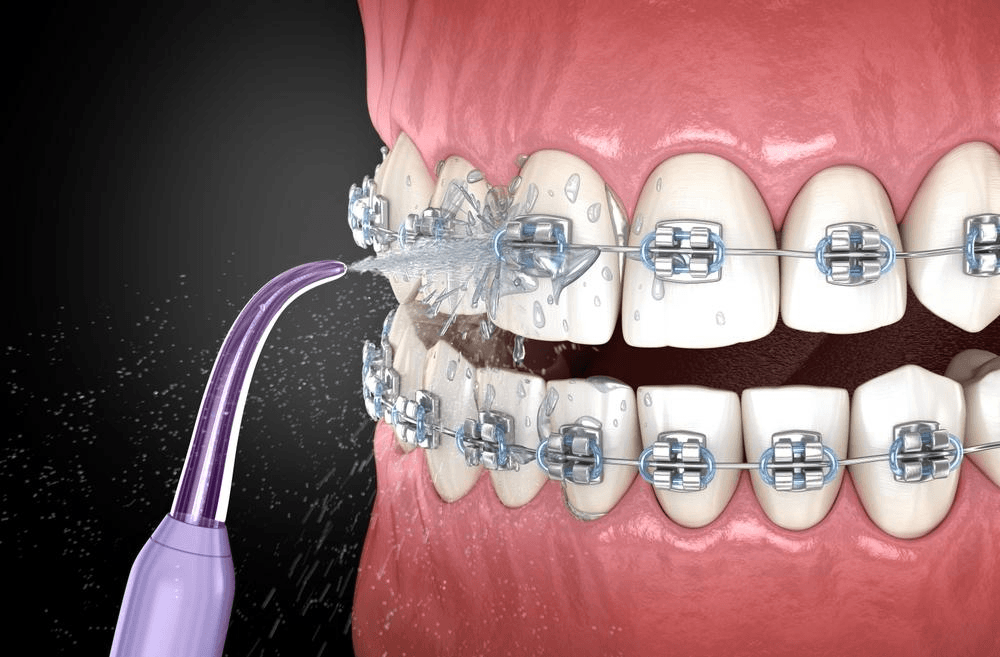
- Floss daily (water flosser recommended)
- Regular professional cleaning
- Impact: Gum disease slows treatment 2-3 months—pristine teeth move faster
Optimal Nutrition – Can save 1-2 months
- Calcium-rich diet (bone remodeling uses calcium)
- Vitamin D supplementation (improves bone density)
- Adequate protein (tissue repair)
- Avoid acidic foods (demineralize teeth)
- Science: Good nutrition speeds bone remodeling—it’s physiology, not magic
Stress Reduction – Can save 1-2 months
- Exercise regularly (improves bone health)
- Adequate sleep (stress hormone reduction)
- Meditation or stress management
- Why: High cortisol (stress hormone) inhibits bone remodeling—reducing stress literally speeds tooth movement
Accelerated Treatment Options – Can save 2-4 months
- Propel Micro-Osteoperforations: Reduces timeline by 20-30% through controlled micro-trauma that stimulates bone remodeling
- AcceleDent Vibrational Device: Proven 30% faster movement with vibrations stimulating osteoblasts
- Cost: $1,500-3,000 for treatment period
- Effectiveness: Clinically proven in multiple studies
- Suhrab’s view: “We offer Propel for motivated patients—it works, but won’t turn a 24-month case into 12 months”
Metal Braces Over Other Options – Can save 2-6 months
If appearance allows, choose metal:
- Metal = fastest (18-24 months)
- Ceramic = 2-3 months slower
- Lingual = 4-6 months slower
- Aligners = 2-12 months slower (highly variable)
Regular Exercise – Can save 1-2 months
- Improves bone density
- Reduces stress (lowers cortisol)
- Improves circulation (better healing)
- Biochemistry: Exercise increases bone remodeling rate through mechanical stimulation
Avoid Habits That Slow Treatment
Don’t:
- Skip appointments (biggest mistake)
- Ignore elastics (critical for bite correction)
- Eat hard/sticky foods (breaks brackets)
- Stop wearing retainers after treatment (causes relapse, may need retreatment)
Reality check: Can you turn 24 months into 12? No. But can you turn 24 into 20? Absolutely—with proper execution of these strategies.
When Do You See Braces Results?
Your braces timeline depends on multiple factors—case severity, age, bone density, compliance, and the orthodontist’s approach. While 18-24 months is typical, YOUR timeline could be 16 months or 28 months.
The key is choosing an orthodontist who uses advanced diagnostics to predict your timeline accurately, then commits to optimizing every aspect of treatment.
At Neo Dental Care, we don’t just put on braces, we create personalized treatment plans with realistic timelines you can depend on.
Ready to start your braces journey? Schedule your free consultation today.
Frequently Asked Questions
The fastest realistic timeline is 12-16 months for mild cases in teenagers with perfect compliance and optimal biology. However, this is uncommon. Most realistic fast cases take 18-20 months.
Yes, extractions add 3-4 months minimum to treatment. When teeth must be extracted, the orthodontist needs to carefully manage space closure. However, extractions are sometimes necessary for ideal bite and profile.
Not recommended. While your teeth may look straight earlier, the bite alignment requires additional time. Removing braces too early risks relapse—your teeth will shift back.
Retention is forever. You’ll wear retainers indefinitely to prevent relapse. Most patients wear fixed retainers permanently on the back of teeth, plus removable retainers at night.
No maximum age. Adults of any age can get braces successfully. Bone remodeling is slower in older adults, but results are still excellent.
Be cautious of “6-month braces” claims. While possible for extremely mild cases, they often don’t correct bite fully. Most complete, stable treatments take 18+ months.
Clear aligners take 18-36 months (highly variable). Metal braces are typically faster at 18-24 months. Aligner speed depends entirely on patient compliance—wear them 20-22 hours daily.