
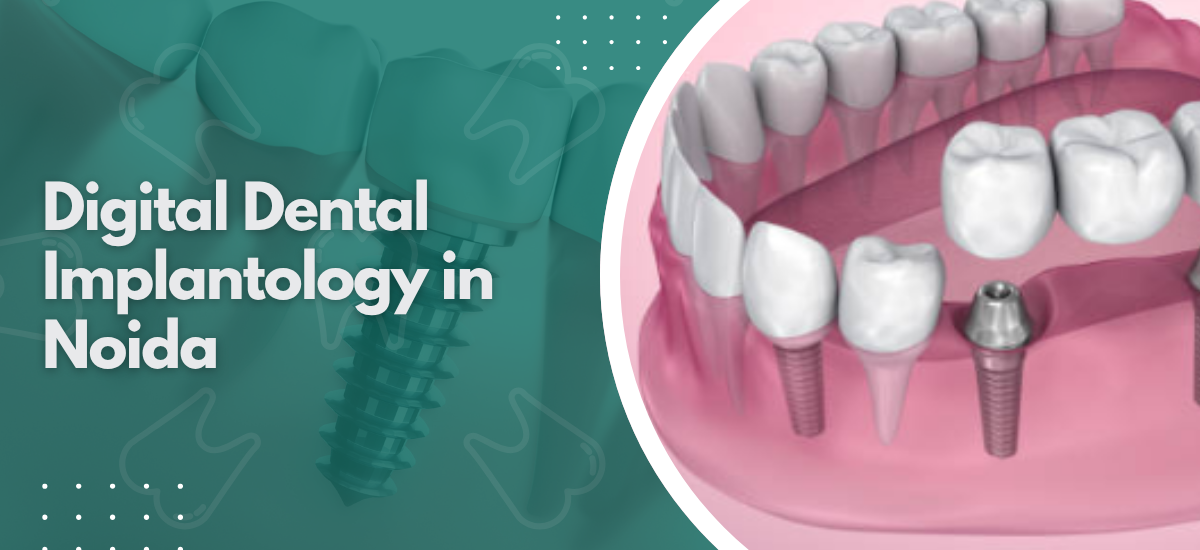
Digital dental implantology uses 3D scanning, on-screen surgical planning, and custom guides to place implants to a confirmed position rather than a surgeon’s best estimate. Position, depth, and angle are decided before the patient sits down. What happens in surgery is execution of that plan, not the plan itself.
According to Dr. Suhrab Singh, renowned dentist in Noida, “digital implantology lets us plan the exact position, angle, and depth of every implant on a 3D model of the patient’s jaw before they even sit in the surgical chair, which changes what we can guarantee about the outcome.”
How Does the Digital Implantology Workflow Actually Work?
The actual clinical decision making happens before the patient arrives. Surgery is just where the plan gets carried out.
CBCT Scanning Comes First: One cone beam CT session maps bone density, nerve location, and sinus boundaries in three dimensions, giving the clinician what’s needed to plan dental implants without guessing at anatomy that a flat X-ray can’t show.
Then the Plan Gets Built on Screen: Position, depth, and angulation are all set digitally using that scan data so the surgical plan is based on what’s actually in that specific patient’s jaw rather than on what’s typically there.
A Physical Guide Gets Manufactured From the Plan: It fits over the patient’s existing teeth or gum tissue and when surgery begins the drill follows that guide rather than the surgeon’s judgement about direction and depth, which is a fundamentally different kind of control.
Surgery Becomes Execution Rather Than Decision Making: The implant reaches the confirmed depth and angle and any deviation from what was planned is measured in fractions of a millimetre rather than something you’d notice by feel.
The Restoration Gets Designed the Same Way: Fit, bite, and aesthetics are all confirmed on screen before anything gets fabricated so changes happen digitally rather than in someone’s mouth after the crown’s already been made.
It’s worth understanding what digital dental implantology actually changes about the surgical process before choosing a clinic based on cost or location alone.
Who Benefits Most from Digital Implantology?
Some cases work fine with conventional placement. Others genuinely can’t be done well without this.
When Bone Volume Is Tight: Very little margin exists between where an implant can go and where it can’t when bone is limited, so digital planning confirms what’s actually feasible and whether grafting is needed before surgery is scheduled rather than after the patient is already on the chair.
Full Arch Rehabilitation: Getting four or six implants to relate correctly to each other spatially across a jaw with no remaining teeth isn’t something you can work out one implant at a time, and digital planning handles all positions in relation to each other simultaneously rather than sequentially.
Near Nerves and the Sinus: Both the inferior alveolar nerve and the maxillary sinus are closer to common implant sites than most patients expect and a 3D scan shows exactly what clearance exists, which changes how surgery gets approached in ways a conventional X-ray simply can’t inform.
Patients Who Prefer Less Tissue Disruption: Flapless surgery is only viable when positioning is handled by a guide rather than estimated freehand, and in suitable cases it means considerably less tissue involved and faster recovery compared to conventional approaches.
After a Previous Implant Failure: Going back in freehand without understanding what went wrong tends to produce the same result, and the digital workflow identifies what contributed to the failure including angulation, bone loss, and nerve proximity before anything new gets attempted.
Before deciding on a clinic based on price or proximity, understanding how microscopic dentistry and other precision treatments perform differently in a clinically verified environment gives a more complete picture of what infrastructure actually changes at the treatment level.
Why Choose Neo Dental Care?
Neo Dental Care is the first clinic in Noida to offer digital dental implantology, led by Dr. Suhrab Singh, NABH accredited dentist and recipient of the Best Dentist in Noida award at the National Quality Achievement Awards 2020, with extensive experience across implantology, restorative dentistry, and oral surgery.
Patients who’d seen other clinics before coming here regularly say their treatment plan looked different after a 3D assessment. That’s not unusual. A plan built on scan data and a plan built on a conventional X-ray aren’t the same document and they don’t produce the same surgical outcome.