
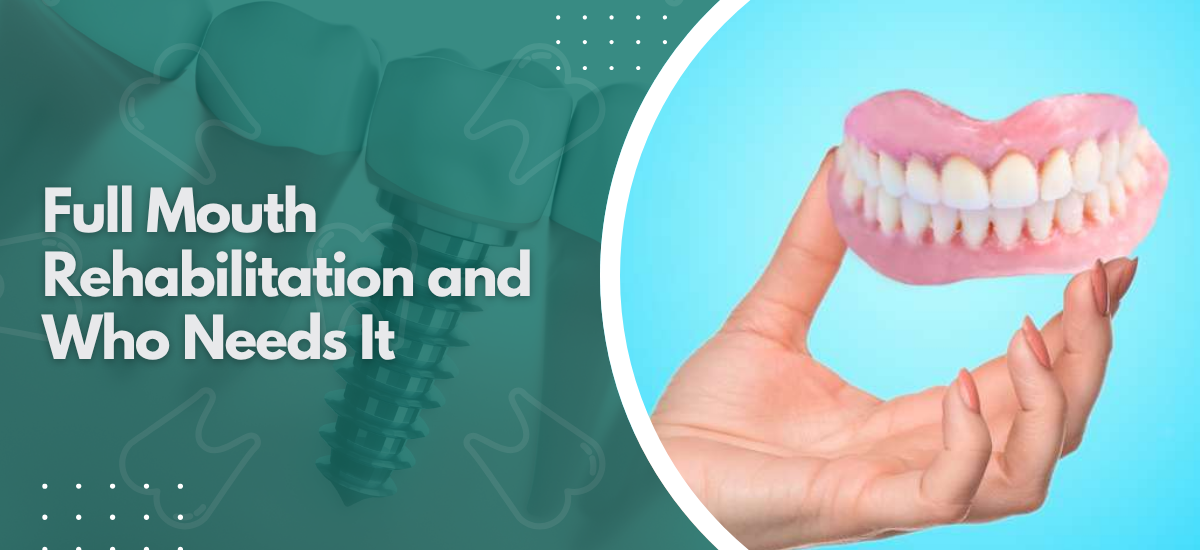
Full mouth rehabilitation, also known as full mouth reconstruction, is a comprehensive dental treatment that rebuilds or replaces all teeth in the mouth using a combination of restorative and cosmetic procedures. It covers function, oral health, and appearance together rather than one at a time. The specific procedures involved depend on the patient’s condition, which can include tooth loss, severe decay, chronic jaw pain, or significant tooth wear.
According to Dr. Suhrab Singh, renowned dentist in Noida, “full mouth rehabilitation isn’t about making teeth look better, it’s about restoring a bite that functions correctly and a dentition that a patient can actually maintain long term without ongoing structural failure.”
Who Actually Needs Full Mouth Rehabilitation?
Some patients come in with one problem. Others arrive with five that are all connected to each other without anyone having told them that yet.
Severe Wear: Grinding for years, drinking a lot of acidic stuff, untreated reflux, any of these can leave teeth worn down so significantly that the patient’s bite collapses and rebuilding it requires planning the entire arch rather than patching individual teeth that keep breaking because the underlying bite issue was never addressed.
Multiple Missing Teeth: A gap doesn’t just sit there. The teeth around it start moving into the space, the bite shifts, and the loading on whatever’s left goes wrong in ways that take years to show up as pain or fracture. Dental implants placed as part of a full arch plan address this properly rather than treating each gap as though it exists independently of everything else in the mouth.
Trauma: Car accidents, sports injuries, falls. When several teeth get damaged at once the restoration has to account for how they all need to work together. Fixing them one at a time in separate appointments without a coordinated plan tends to produce something that looks uneven and doesn’t last.
Chronic Jaw Pain or TMJ Issues: When jaw joint pain, clicking, or limited mouth opening is present alongside poor dental condition, the bite and the joint need to be addressed together as part of the rehabilitation plan rather than treating the jaw separately from the teeth causing the problem.
Developmental Issues: Some patients were born with teeth that didn’t form right, never reached full size, or have abnormal structure that makes standard treatment inadequate. These cases need a full picture from the start.
Preserving structurally compromised teeth through root canal treatment before finalising a rehabilitation plan keeps more options available and often reduces the number of implants needed across the full arch.
What Does Full Mouth Rehabilitation Actually Involve?
The procedures differ between patients. The logic for sequencing them doesn’t.
Bite Mapping Before Anything Else: Restorations placed on a faulty bite fail. That’s not a risk, it’s a pattern. So the first thing that gets mapped is where the jaw actually sits relative to where the teeth meet, and any discrepancy gets addressed before a single crown or veneer goes in.
Crowns and Bridges: Teeth that can’t hold up structurally under normal biting forces need full coverage rather than a filling that’ll crack within two years, and bridges can hold space during the implant healing phase rather than leaving gaps open while osseointegration happens.
Gum Disease First: Active periodontal disease doesn’t pause while restorations are being placed on top of it. The tissue keeps deteriorating and the restorations fail with it. Gum treatment has to be completed and stable before cosmetic or restorative work goes in, not scheduled alongside it.
Orthodontics When the Position Is Off: Straightening badly positioned teeth before restoring them changes what’s actually achievable. Trying to restore them in the wrong position requires so much tooth preparation that structural integrity gets compromised, and that shows up as fractures a few years later.
Order Matters as Much as Choice: Choosing the right procedures and putting them in the wrong sequence produces the same outcome as doing the wrong procedures. Cosmetic work that goes in before structural and periodontal stability is established fails early. Every time.
For patients whose concerns are primarily about aesthetics rather than function, understanding the difference between a full mouth rehabilitation and a smile makeover determines which type of treatment planning fits the clinical situation they’re actually presenting with.
Why Choose Neo Dental Care?
Neo Dental Care offers full mouth rehabilitation planning using CBCT scanning, digital occlusal analysis, and coordinated treatment sequencing across implants, crowns, periodontal therapy, and orthodontics, led by Dr. Suhrab Singh, NABH accredited dentist and recipient of the Best Dentist in Noida award at the National Quality Achievement Awards 2020.
Most patients arriving for full mouth rehabilitation have had individual teeth treated multiple times elsewhere without the overall picture changing. That’s because treating separate teeth without a system level plan doesn’t fix the system. A coordinated assessment does.