
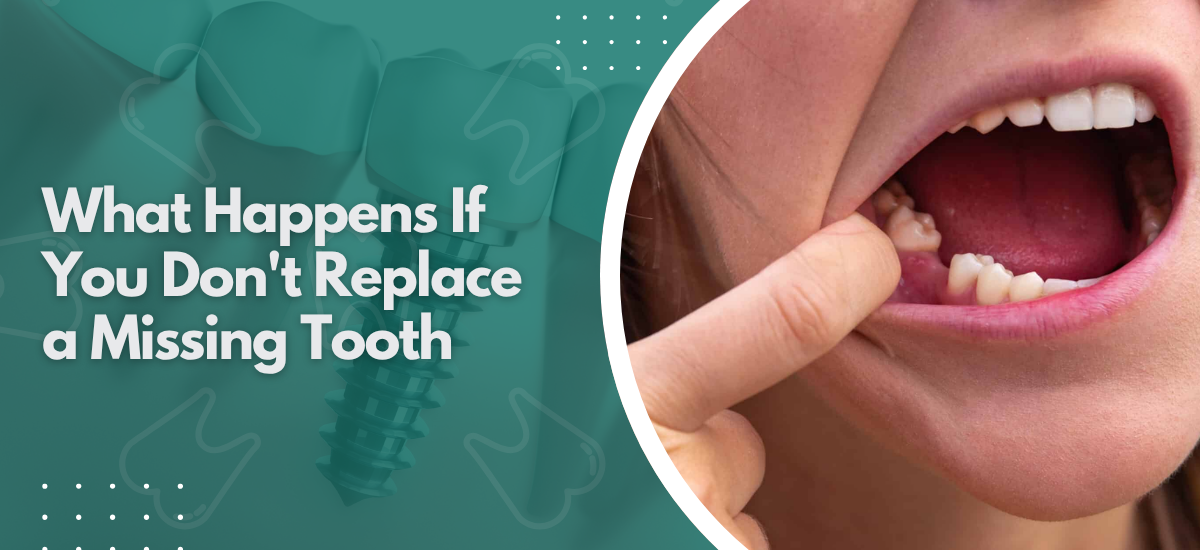
Not replacing a missing tooth causes a domino effect. The jawbone starts shrinking without a root to stimulate it, losing up to 25% of its volume in the first year. Adjacent teeth shift and tilt into the gap, the opposing tooth drifts out of alignment, and the bite changes in ways that load remaining teeth unevenly. Over time this leads to facial sagging, difficulty chewing, increased decay risk, and potential jaw joint problems. The longer the gap stays untreated the more complex and expensive the solution becomes.
According to Dr. Suhrab Singh, renowned dentist in Noida, “a missing tooth is never just a cosmetic problem because the bone, the adjacent teeth, and the bite are all affected within a timeframe that most patients significantly underestimate when they decide to wait.”
What Actually Happens to the Mouth When a Tooth Isn’t Replaced?
Most people think a missing tooth is just a gap. It isn’t. It’s the start of a cascade that affects the whole arch over time.
Bone Loss: Jawbone needs a root pressing against it to stay dense and once that root is gone the bone starts shrinking within weeks, which catches patients off guard when they finally decide to get dental implants a couple of years later and find out they need a graft first because there’s no longer enough bone to work with.
Teeth Start Drifting: Adjacent teeth don’t ask permission before moving into a gap and once they start tilting toward the space they create new areas that collect food, become impossible to clean properly, and eventually develop decay in positions that were perfectly healthy before the extraction happened.
The Opposite Tooth Has Nobody to Bite Against: Without a tooth to meet it the opposing one keeps erupting downward or upward past its normal level because nothing is stopping it, and left long enough it extrudes far enough to genuinely interfere with chewing and sometimes ends up needing its own treatment that would never have been necessary otherwise.
The Face Changes Over Time: Bone and teeth together support the soft tissue structure around the mouth and when enough of that foundation erodes the skin above it follows, producing a sunken look and thinning around the lips that patients often attribute to aging when the real cause is sitting inside their jaw.
Decay and Gum Disease in Teeth That Were Fine: Shifted teeth produce new angles and contact points where food accumulates and brushing doesn’t reach and the result is cavities and gum problems developing in teeth that had nothing wrong with them before the gap was left open.
For patients who are already thinking about restoration, the role of dental crowns in restoring teeth that have drifted or over-erupted because of a gap helps explain why the treatment plan often involves more than just replacing the missing tooth itself.
How Long Can You Actually Wait?
A missing tooth should be replaced as early as possible because biological and mechanical changes begin shortly after loss. Bone density reduces, adjacent teeth start migrating, and occlusal relationships alter progressively over time, increasing the complexity of future treatment.
First Three Months: Everything looks fine and nothing hurts which is the exact reason this period gets wasted, but the bone is already shrinking and the teeth are already moving and the longer this window is spent waiting the narrower the treatment options become on the other side of it.
Three to Six Months: X-rays now show measurable drift and the opposing tooth has shifted, but bone volume is usually still adequate at this stage and replacement with an implant or bridge is still a relatively contained procedure rather than a multi-step rehabilitation.
Six Months to Two Years: Adjacent teeth have moved enough that orthodontic correction may be needed before replacement is even possible, bone loss is significant enough to raise questions about graft requirements, and what started as a single missing tooth has become a treatment plan with multiple stages and a considerably larger price tag.
Beyond Two Years: Some patients at this stage find that implant placement without bone grafting isn’t viable at all, that the bite has shifted across the whole arch rather than just around the gap, and that what they need is closer to full mouth rehabilitation than a simple replacement procedure.
The Financial Reality: Every stage added to the treatment because of delayed replacement costs more in total than what early replacement would have cost, so the logic of waiting to save money consistently produces the opposite outcome for the patients who try it.
For patients who want to understand how routine dental assessment connects to catching progressive changes like this before they compound further, the context around early detection in our blog on oral cancer detection illustrates why regular appointments matter well beyond just cleaning.
Why Choose Neo Dental Care?
Neo Dental Care offers digital implantology, fixed bridgework, and full assessment for patients presenting with untreated gaps at any stage, led by Dr. Suhrab Singh, NABH accredited dentist and recipient of the Best Dentist in Noida award at the National Quality Achievement Awards 2020, with extensive experience across implantology, restorative dentistry, and oral surgery.
Patients who arrive expecting a single implant after waiting two years regularly leave with a plan that includes grafting and adjacent tooth work, not because it was inevitable but because the jaw doesn’t stay still while people make up their minds about whether to act.