
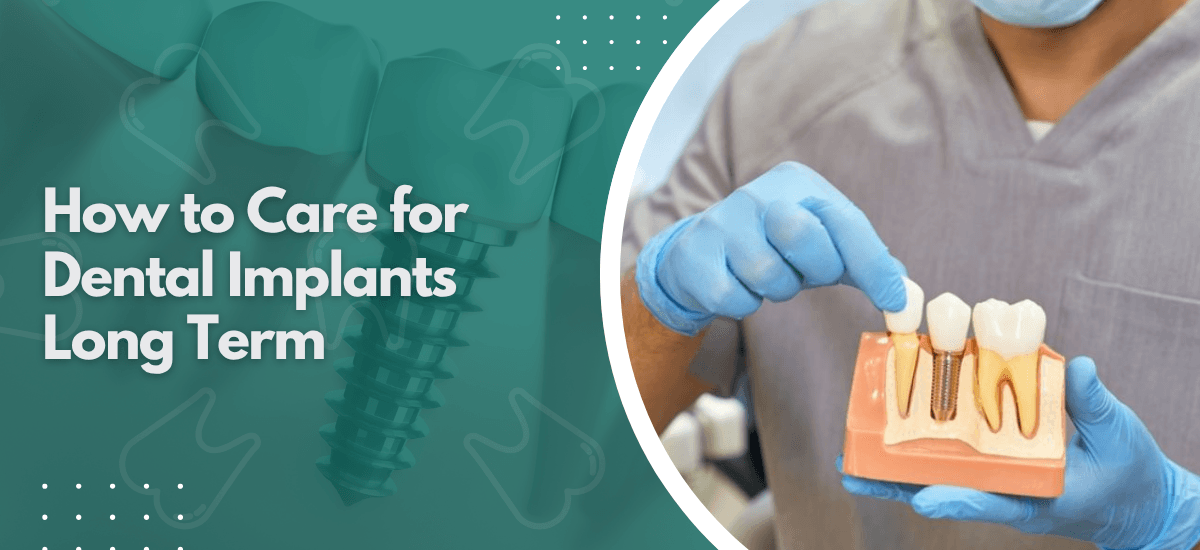
Dental implants can last a lifetime but the tissue around them is just as vulnerable to bacterial damage as the tissue around natural teeth, which is something most patients aren’t told clearly enough after placement. The fixture itself doesn’t decay but the bone holding it and the gum surrounding it absolutely can deteriorate if maintenance gets neglected, and that’s why what happens in the years after surgery matters just as much as how the surgery went.
According to Dr. Suhrab Singh, renowned dentist in Noida, “an implant that’s placed well but maintained poorly will fail eventually and most of those failures are preventable with consistent home care and regular professional review rather than anything complicated.”
What Does Proper Dental Implant Care Actually Involve?
The basics look similar to natural tooth care but a few things need specific attention because implants interact with surrounding tissue differently from natural roots.
Brushing Around the Implant: Plaque accumulates at the implant crown margin just like it does around natural teeth and a soft bristle brush used at the correct angle twice daily stops that biofilm from getting established deep enough in the tissue to cause the kind of damage that cleaning alone can’t fix after the fact.
Interdental Cleaning: Floss, implant specific floss, or interdental brushes used daily around the crown clear what the toothbrush can’t reach, particularly below the contact point between the crown and the adjacent teeth where food collects consistently regardless of how well everything else is being cleaned.
Water Flossers: Pulsed water irrigation gets below the gumline around dental implants more effectively than thread floss in a lot of cases and is particularly useful for patients who have multiple implants or find conventional interdental cleaning genuinely difficult to keep up with every day.
Habits That Work Against the Implant: Grinding without a night guard, biting hard objects, smoking, and using teeth as tools all create mechanical or biological stress that doesn’t announce itself immediately but builds up quietly over years until it shows up as a problem at a clinical review.
Professional Maintenance Every Three to Six Months: Peri-implant tissue needs professional review more frequently than natural teeth because early inflammation around implants progresses to bone loss faster than periodontal disease does around roots, and finding it early rather than late changes the treatment picture considerably.
Professional cleaning around implants needs instruments that won’t scratch the titanium surface and how Swiss AirFlow painless scaling removes peri-implant biofilm without metal contact makes it the clinically preferred option for patients maintaining implants over the long term.
What Causes Dental Implants to Fail Long Term?
Most long term implant failures have identifiable contributing factors that were present well before the failure itself and the majority of them are preventable when patients are being reviewed at appropriate intervals.
Peri-Implantitis: Bacterial infection around the implant drives progressive bone loss that eventually loosens the fixture and it develops from the same biofilm accumulation that causes gum disease around natural teeth except it tends to move faster and responds less predictably to treatment once it’s properly established.
Smoking: Nicotine cuts blood supply to the peri-implant tissue and compromises both initial healing and long term tissue stability in ways that produce measurably higher failure rates at every stage from osseointegration through to years of maintenance regardless of what the patient’s home cleaning routine looks like.
Uncontrolled Diabetes: Elevated blood sugar impairs healing and immune response in ways that directly affect both how well the implant integrates initially and how stable the surrounding tissue stays over time, making blood sugar management as relevant to implant survival as anything happening in the mouth.
Bruxism Without a Night Guard: Grinding forces transmitted through the crown go straight to the bone without the natural cushioning a periodontal ligament would normally provide and over years that mechanical overload contributes to crown fracture, abutment loosening, and in severe cases the fixture itself giving way.
Skipping Professional Maintenance: Peri-implant mucositis caught early is reversible with a professional clean and better home care but once it progresses to peri-implantitis the bone loss requires surgical management and in advanced cases leaves the implant beyond saving regardless of what’s attempted.
For patients who want to understand how the same bacterial forces that affect implants also drive progressive destruction in natural teeth, the full picture is covered in the context of gum disease from gingivitis through to advanced periodontitis.
Why Choose Neo Dental Care?
Neo Dental Care offers implant maintenance as part of its ongoing patient care protocol including peri-implant assessment, Swiss AirFlow GBT cleaning, and clinical review at appropriate intervals, led by Dr. Suhrab Singh, NABH accredited dentist and recipient of the Best Dentist in Noida award at the National Quality Achievement Awards 2020.
Patients who keep up with maintenance here consistently report no complications years after placement while those who skip appointments tend to come back with peri-implant problems that were entirely preventable and considerably more expensive to manage than the reviews they decided weren’t worth attending.