
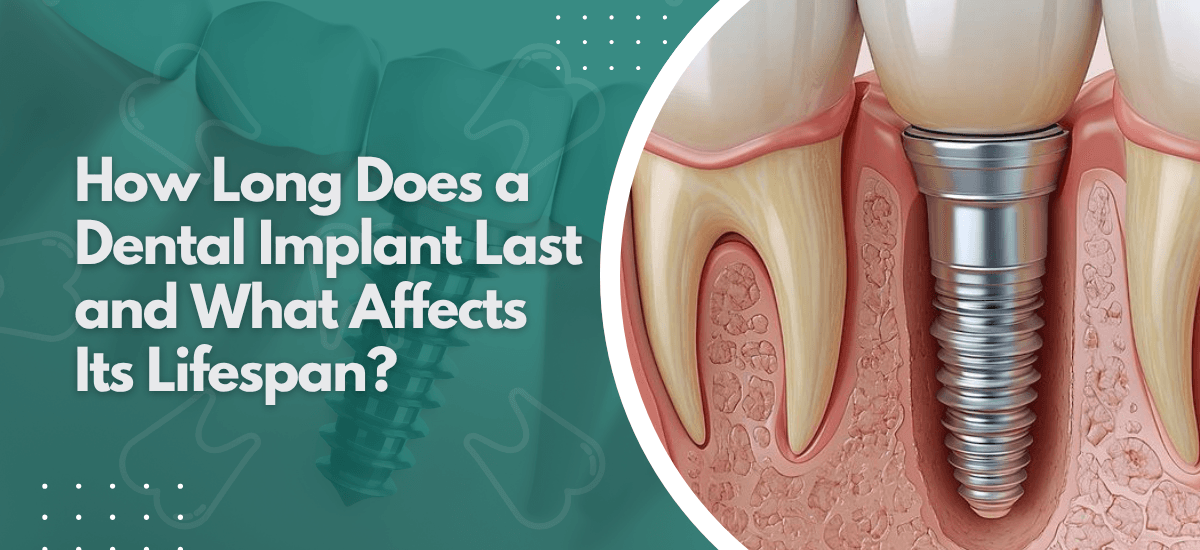
A dental implant is one of the most durable tooth replacement options available today. The titanium post that integrates into the jawbone is designed to function for decades, and in many cases for life. Clinical data consistently shows survival rates above 95% at ten years and above 90% at twenty years. What determines whether an implant reaches that potential is a combination of patient health, bone quality, oral hygiene, implant grade, and how carefully the treatment was planned from the start.
According to Dr. Suhrab Singh, a dentist at Neo dental clinic in Noida,
“The implant itself is not the weak link. What shortens implant lifespan is almost always something preventable. Bone loss from smoking, uncontrolled blood sugar, poor hygiene around the implant crown, or untreated bruxism. When patients manage these factors consistently, their implants perform for life.”
Considering a dental implant?
What Factors Help a Dental Implant Last Longer?
Implant longevity depends on decisions made before the procedure, during surgery, and throughout the years of use that follow.
- Osseointegration quality: The bond between the titanium post and surrounding jawbone is the foundation of implant durability. Rushing the loading phase before this bond is complete remains one of the most common causes of early failure.
- Implant brand and material standard: Premium systems use medical-grade titanium with engineered surface textures that promote bone attachment. The gap between premium and budget implants becomes most visible in the 10 to 15 year window.
- Consistent oral hygiene: Peri-implantitis, bacterial infection around the implant post, is the leading biological cause of late implant failure. Daily brushing, interdental cleaning, and biannual professional scaling all reduce this risk.
- Regular dental review: Bone levels around an implant can shift gradually and without pain. Annual radiographic review catches marginal bone loss early, before it becomes irreversible.
The quality of planning and implant systems used at surgery determines how well that foundation holds, and every dental implant in Noida at Neo Dental Care starts with CBCT imaging and certified systems to ensure exactly that.
What Reduces Dental Implant Lifespan and When Does Failure Happen?
Implant failure follows a pattern, and understanding the timeline helps patients recognise where their own risk sits.
- Smoking and early failure: Nicotine restricts blood flow to bone and gum tissue, slowing osseointegration. Smokers have implant failure rates two to three times higher than non-smokers.
- Uncontrolled diabetes: Elevated blood glucose impairs healing and weakens the bone-implant interface. Patients with well-managed diabetes, however, show survival rates comparable to non-diabetic patients.
- Bruxism and mechanical overload: Habitual grinding places repeated lateral forces on the crown and implant neck, causing progressive bone loss over time. A custom night guard reduces this load substantially.
- Low bone density and missed follow-ups: Implants in low-density bone are more susceptible to late failure, especially when annual reviews are skipped and small bone changes are left unmanaged. For context on when a root canal remains a viable alternative to extraction and implant, see our blog on inflamed pulp teeth.
|
Failure Window |
Timeline |
Primary Causes |
|
Early failure |
0 to 6 months |
Smoking, uncontrolled diabetes, poor osseointegration |
|
Mid-term failure |
1 to 5 years |
Peri-implantitis, bruxism, cement remnants |
|
Late failure |
Beyond 10 years |
Cumulative bone loss, missed follow-ups, low bone density |
|
Crown replacement |
10 to 15 years |
Normal wear, not implant failure |
|
Implant survival |
20 years+ |
90%+ with managed risk factors |
Why Choose Dr. Suhrab Singh at Neo Dental Care?
Dr. Suhrab Singh is an MDS-qualified implantologist at Neo Dental Care, Noida, recognised with the National Quality Achievement Award for Best Dentist in Noida 2020. The clinic operates within the NABH-accredited Neo Hospital, uses CBCT imaging for every implant case, and sources implants exclusively from internationally certified manufacturers. Every patient receives a written treatment plan and complete procedure records, including the implant lot number and manufacturer certificate, before leaving the clinic.
Frequently Asked Questions
A dental implant can last a lifetime with proper care. Clinical studies report survival rates above 95% at 10 years and above 90% at 20 years. The crown typically lasts 10 to 15 years before needing replacement.
Smoking, uncontrolled diabetes, peri-implantitis, poor oral hygiene, bruxism, and low bone density are the primary factors. Each weakens the bone-implant interface or accelerates bone loss around the post.
The titanium fixture is designed to be permanent. Most patients keep their implants for 25 years or more. The crown above the gum line will eventually need replacement after 10 to 15 years of regular use.
Warning signs include persistent pain, swelling or bleeding gums, visible movement when biting, and a dull ache that does not resolve. See your dentist promptly, as early intervention improves outcomes significantly.