
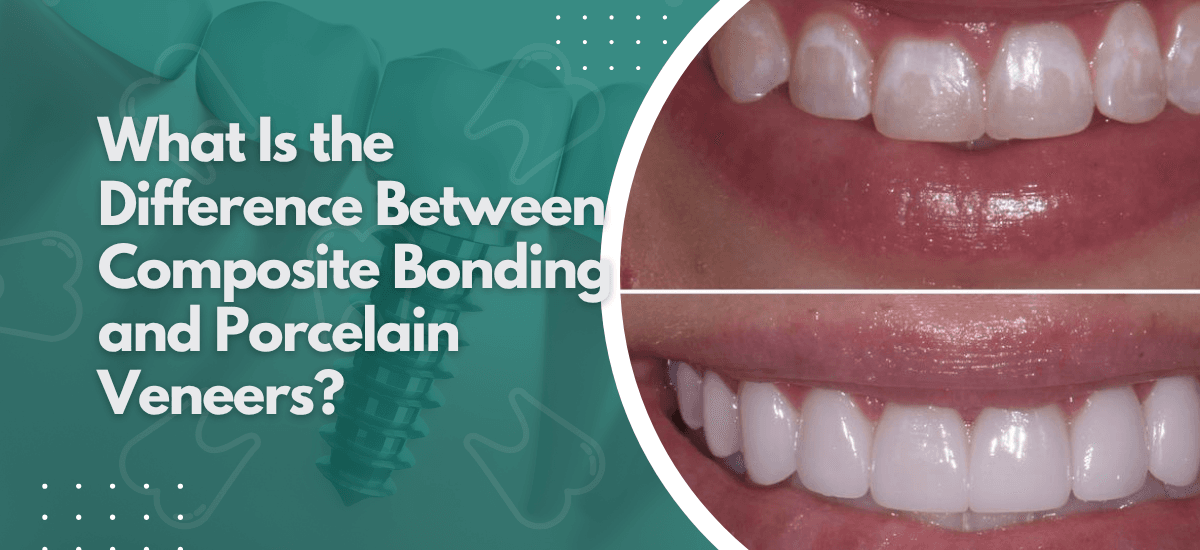
Composite bonding and porcelain veneers are both used to improve the appearance of front teeth, and both can address discolouration, chips, gaps, and shape irregularities. What separates them is how they work, how long they last, how much tooth preparation is involved, and what kind of result they produce. Choosing between the two is not simply a question of cost. It is a clinical decision that depends on the extent of the correction needed, the condition of the underlying tooth, and how long the patient wants the result to last.
According to Dr. Suhrab Singh, a dentist at Neo dental clinic in Noida,
“Composite bonding and porcelain veneers are not interchangeable. They sit at different points on the spectrum of cosmetic intervention. Bonding is ideal for minor corrections where preserving tooth structure is the priority and the patient wants a result in one visit. “
Unsure whether bonding or veneers are right for your case?
What Makes Composite Bonding and Porcelain Veneers Different Clinically?
The two procedures differ at every stage of treatment, from how much tooth structure is involved to how the final result is fabricated and how it ages over time.
- Tooth preparation: Composite bonding requires no enamel removal in most cases. The resin is applied directly to the existing tooth surface, shaped by hand, and hardened with a curing light in a single visit. Porcelain veneers require the removal of a thin layer of enamel, typically 0.3 to 0.7 mm, to create space for the ceramic shell.
- Fabrication and aesthetics: Composite resin is applied chairside, which gives the dentist direct control over the shaping process but limits the optical properties achievable. Porcelain is fabricated in a laboratory by a dental technician and mimics the light transmission and surface texture of natural enamel far more closely than composite can.
- Longevity and maintenance: Composite bonding lasts 3 to 5 years under normal conditions before it requires polishing, repair, or replacement due to surface staining, chipping, or wear.
- Cost and reversibility: Composite bonding costs significantly less per tooth and is fully reversible, making it a lower-risk entry point into cosmetic dentistry.
Both procedures are available at Neo Dental Care. Undecided patients can start with a cosmetic dentistry consultation in Noida, where digital smile design shows the expected outcome before any preparation begins.
Which Cases Are Better Suited to Composite Bonding and Which to Porcelain Veneers?
The clinical indication determines the appropriate treatment. There is significant overlap in what the two procedures can address, but each has cases where it clearly outperforms the other.
- Composite bonding is the stronger choice for: A single chipped or cracked front tooth where the surrounding teeth are intact and no shade correction is needed. Minor gap closure between two teeth without crowding elsewhere in the arch.
- Porcelain veneers are the stronger choice for: Multiple front teeth that need correction simultaneously, where consistency of shade, shape, and translucency across the whole smile matters.
- Where clinical assessment is essential: Patients with a compromised enamel layer, existing large composite restorations on the front teeth, or significant bite load on the upper front teeth need careful evaluation before either procedure is chosen.
- When neither is sufficient alone: Some cases presenting with discolouration, chips, and spacing simultaneously benefit from combining both bonding for minor corrections on less visible teeth and veneers for the central and lateral incisors that define the smile. Understanding how bonding and veneers fit within a broader aesthetic plan is covered in what a smile makeover includes.
Factor | Composite Bonding | Porcelain Veneers |
Tooth preparation | None to minimal | 0.3 to 0.7 mm enamel removal |
Reversibility | Yes | No |
Fabrication | Chairside, one visit | Laboratory, two appointments |
Longevity | 3 to 5 years | 10 to 15 years |
Stain resistance | Moderate, requires polishing | High, does not stain |
Aesthetics | Good | Excellent, mimics natural enamel |
Best for | Minor corrections, single teeth | Multiple teeth, significant shade or shape change |
Why Choose Dr. Suhrab Singh at Neo Dental Care?
Dr. Suhrab Singh is an MDS-qualified cosmetic and restorative dentist at Neo Dental Care, Noida, recognised with the National Quality Achievement Award for Best Dentist in Noida 2020. The clinic offers both composite bonding and porcelain veneer treatment within the NABH-accredited Neo Hospital, using digital smile design planning so patients can compare expected results for each option before any preparation is done.
Frequently Asked Questions
Neither is universally better. Composite bonding is faster, reversible, and costs less but lasts 3 to 5 years and is prone to staining. Porcelain veneers last 10 to 15 years, resist staining, and produce superior aesthetics but require enamel preparation and laboratory fabrication.
Yes. Composite bonding is reversible and can be removed without permanent changes to the tooth structure in most cases. Patients who start with bonding and want a more durable result can upgrade to porcelain veneers at a later stage.
Composite bonding typically lasts 3 to 5 years with regular maintenance and polishing. Porcelain veneers have survival rates above 90% at 10 years when bonded to enamel. The difference in longevity is significant and is the primary reason for the cost difference.
No. Composite bonding is the most conservative cosmetic procedure available. It requires little to no enamel removal and is fully reversible. The composite resin is applied directly to the existing tooth surface without permanent alteration.