
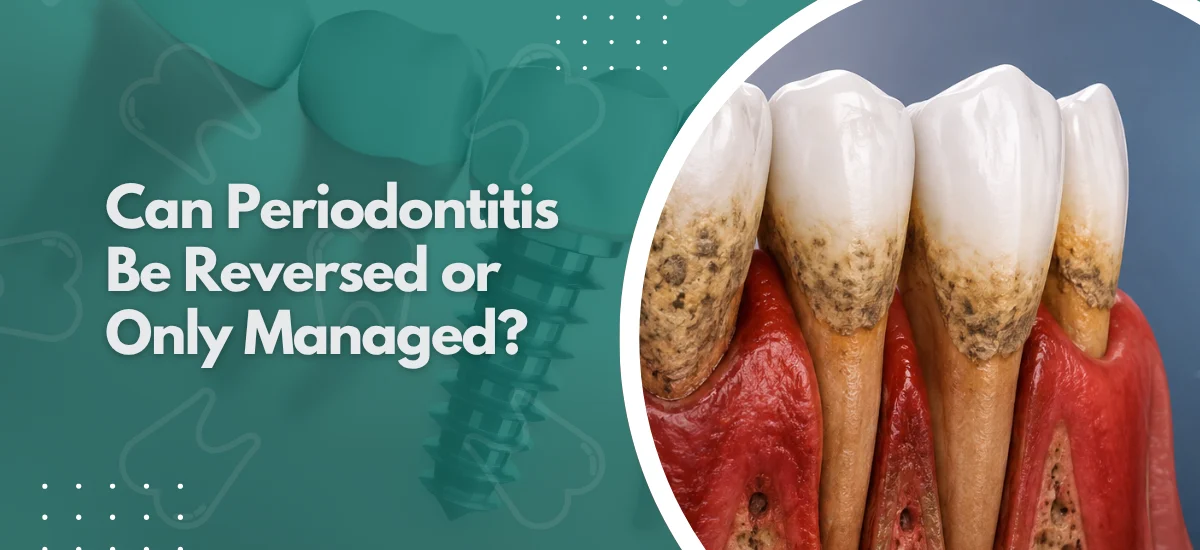
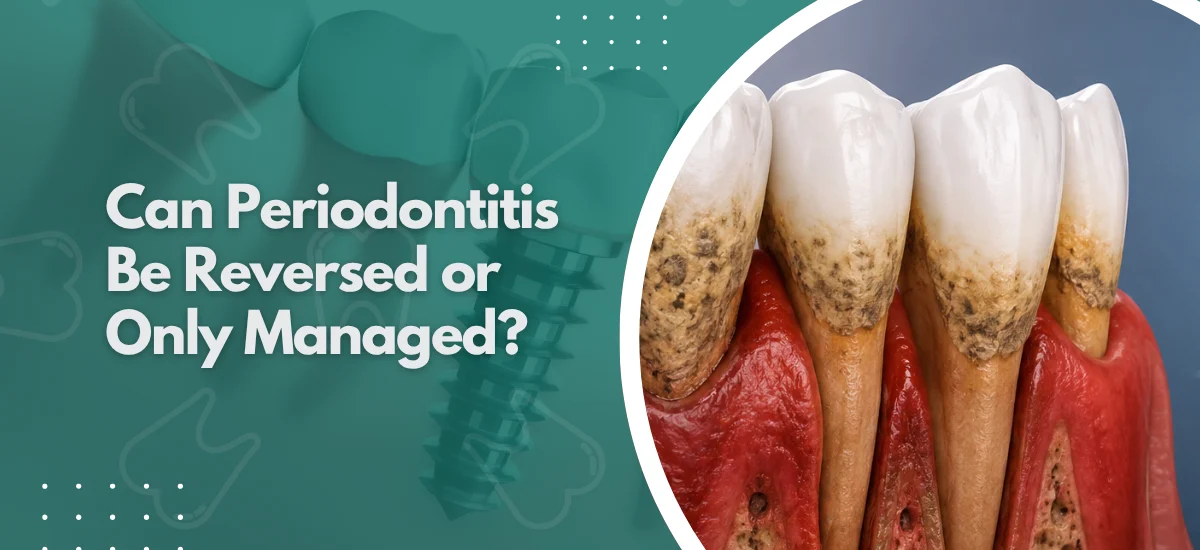
Once periodontitis has damaged the jawbone and the connective tissue holding a tooth in place, that damage doesn’t grow back on its own. What treatment can do, and does reliably, is stop the disease from progressing further and keep the remaining bone and gum tissue stable for years. So the real distinction isn’t reversal versus failure. It’s reversal versus control, and control is genuinely achievable. Patients who understand that tend to stay far more consistent with the maintenance visits that actually keep periodontitis from advancing. The goal from diagnosis onward isn’t to undo the damage. It’s to make sure no more of it happens.
According to Dr. Suhrab Singh, one of the Best Dentist in Noida, “Patients want to hear that treatment reverses the damage, and I understand why. It doesn’t, not the bone loss part. What it does is stop the disease in its tracks and keep it there. I’ve had patients stable for over a decade with the same bone level they had at diagnosis. That’s a genuinely good outcome, even though it isn’t a cure.”
What Does Managing Periodontitis Actually Involve?
Management isn’t a single step. It’s an ongoing process built around a few core treatments.
Scaling and root planing: This deep cleaning removes bacteria and tartar from below the gumline, targeting the pockets where periodontitis actively spreads. Still the standard first line treatment.
Laser assisted therapy: For deeper pockets, laser treatment can reduce bacterial load and support tissue healing around the root surface. Often with less discomfort than traditional surgery.
Periodontal maintenance visits: These recall appointments, usually every three to four months, are what actually keep the disease from returning once it’s under control.
Addressing risk factors: Smoking, uncontrolled diabetes, and poor home care all speed up periodontitis. Managing these alongside dental treatment makes a real difference to the outcome.
A full evaluation covering all of this is where the plan actually gets built, based on how far the disease has progressed in your specific case.
When Does Periodontitis Require More Than Standard Cleaning?
Some cases respond well to routine care. Others need a more targeted approach.
Deep pockets that don’t respond to cleaning: When pocket depth stays above five to six millimeters after initial therapy, additional treatment like laser therapy or surgery is usually the next step.
Bone loss visible on imaging: Significant bone loss sometimes calls for regenerative procedures aimed at supporting the remaining structure, even though the lost bone itself won’t fully return.
Recurrent bleeding or infection: Gums that keep bleeding or flaring up despite consistent care often signal that the current maintenance schedule needs to be more frequent. Not that it’s failing.
Multiple affected teeth with mobility: Loose teeth from advanced bone loss need a coordinated plan, sometimes involving splinting or specialist referral, rather than treatment tooth by tooth.
Understanding the difference between gingivitis and periodontitis is important too, since knowing which stage you’re actually at changes what management looks like from the start.
Why Choose Dr. Suhrab Singh for Periodontitis Treatment in Noida?
Dr. Suhrab Singh is an expert in gum treatment in Noida with over twelve years of experience treating periodontal cases. He holds an MDS qualification and received the National Quality Achievement Award for Best Dentist in Noida in 2020.
Every periodontitis case is staged and reviewed with imaging before a maintenance schedule is set. So patients know exactly what stability looks like for their specific case, not a generic timeline. Call +91 9818872732 to book your consultation.
Frequently Asked Questions
No. Lost bone and tissue don’t grow back, but the disease itself can be fully controlled.
Typically every three to four months. Skipping these is the most common reason it returns.
Not the bone itself, though it can support healing and reduce pocket depth significantly.
Not necessarily. Most patients keep their teeth long term with consistent, proper management.
Disclaimer
This blog is for educational purposes only and is not a substitute for a professional periodontal evaluation. See a dentist promptly if you notice bleeding, loose teeth, or receding gums.