

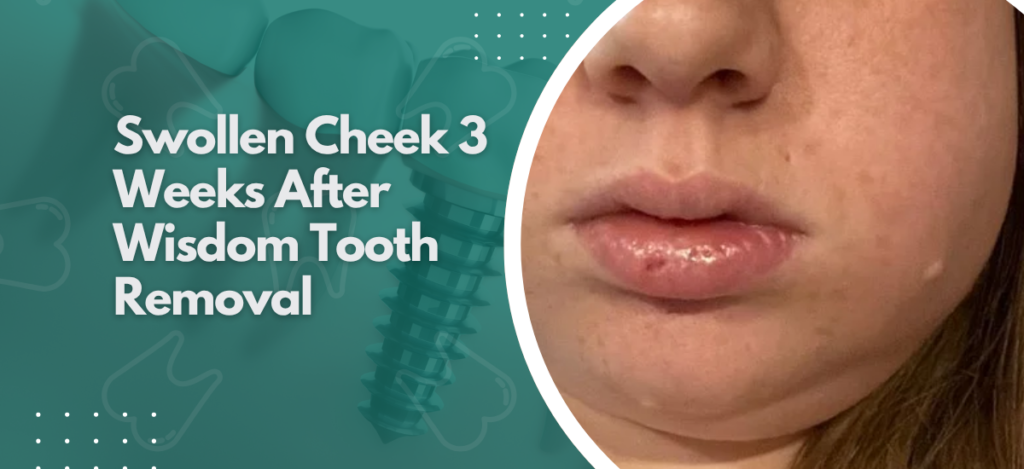
Three weeks in and the cheek is still swollen that is not healing, that is a complication. Normal post-surgical swelling peaks around day two or three and clears by day seven to ten. Something showing up or lingering at week three is new. Most likely a delayed infection. Sometimes a dry socket that never properly healed, or debris sitting in the socket creating a chronic inflammatory response. Whatever the cause, waiting it out is not the right move. Call your dentist today.
According to Dr. Suhrab Singh,One of the best dentist in Noida, “Week three swelling surprises people because they felt like things were improving. Then it comes back, or they notice it has never really gone. Either way, that picture does not fit normal healing. A delayed infection after wisdom tooth surgery often develops quietly, after the antibiotic course from surgery has finished. Getting imaging done to find the actual cause matters more than starting another round of antibiotics based on a guess.”
What Is Causing the Swelling at Three Weeks?
Three-week swelling is not leftover surgical puffiness. Something new is happening. These are the causes that show up most often.
- Delayed-onset infection: The most common one. These infections develop 1 to 4 weeks after lower wisdom tooth surgery, often appearing after a gap where the patient felt like recovery was going fine. The antibiotic course prescribed after surgery runs out, bacterial populations rebuild in the socket, and infection establishes itself. It happens in roughly 1 in 100 impacted lower wisdom tooth cases higher when bone removal was involved during extraction.
- Dry socket that was never fully resolved: Dry socket happens early, usually within the first few days, when the blood clot is lost and bone is exposed. Some cases drag on, or get partially treated with dressings that helped the pain but did not close the actual problem. At three weeks, an unresolved socket is an open channel for bacteria to create deeper tissue infection and cheek swelling.
- Trapped debris or retained bone fragment: Wisdom teeth are often cut into pieces before removal. A small fragment of bone or tooth can stay behind, sitting in the socket like a splinter, keeping the surrounding tissue chronically inflamed for weeks. It does not always hurt much, which is why patients miss it until the visible swelling becomes impossible to ignore.
- Atypical infection such as actinomycosis: A smaller proportion of delayed post-extraction cheek swellings are caused by bacteria that take weeks to months to produce obvious signs and do not respond to standard antibiotics. Actinomycosis produces a firm, indurated lump in the cheek that arrives well after the extraction itself. It needs culture-guided treatment and proper identification empirical antibiotics alone will not clear it.
What simple and surgical wisdom tooth extraction involves, and the aftercare that reduces these complication risks, is on our simple and surgical tooth extraction in Noida page.
What Should You Do and What Are the Warning Signs?
At three weeks, every instance of cheek swelling needs a dental assessment. How urgently depends on what is happening alongside it.
- Go today if: The swelling is growing. The pain is worse than yesterday. There is fever, pus, or a foul taste that rinsing does not shift. The mouth is harder to open than it was a few days ago. Any swelling that has extended toward the neck or below the jaw is an emergency not a routine next-available appointment.
- Still needs attention within 48 hours if: The swelling has been sitting there for a while and seems stable. A firm painless lump under the cheek with no fever. Occasional discomfort at the socket with nothing visible. These are less alarming in the short term but stable at three weeks still means something is wrong.
- What gets assessed: Clinical examination of the socket, gum, and cheek. A periapical X-ray to look for retained fragments or bone changes. A CBCT scan when the flat X-ray is inconclusive it gives a three-dimensional picture of the entire extraction site, including abscess pockets that a 2D image misses. Treatment follows what the imaging actually shows, not what seems most likely in the consulting room.
- Do not self-treat with leftover antibiotics: It is the most common mistake. Symptoms reduce temporarily, the antibiotics run out, and the problem comes back within days because the underlying cause was never cleared. Some delayed-onset infections involve bacteria that standard amoxicillin does not touch. Identifying the cause before prescribing the treatment is not optional it is what determines whether the treatment actually works.
How jaw pain at three weeks after wisdom tooth extraction fits into the broader picture of post-surgical complications, and when it warrants imaging, is covered in our blog on jaw pain 3 weeks after wisdom tooth extraction.
Why Choose Dr. Suhrab Singh at Neo Dental Care?
Dr. Suhrab Singh leads the oral surgery team at Neo Dental Care, Noida NABH-accredited, inside Neo Hospital, Sector 50 recipient of National Quality Achievement Award 2020. Post-extraction complication cases are assessed with CBCT 3D imaging before any intervention is planned. Patients with delayed swelling or suspected infection after wisdom tooth removal are seen as soon as possible.
Frequently Asked Questions
No. Swelling from surgery should be gone before the end of week two at the latest. Something still there at week three is a complication — usually a delayed infection, sometimes a dry socket or trapped debris that was never properly cleared.
Delayed-onset infection is the most common cause, developing 1 to 4 weeks post-surgery after a symptom-free gap. Other possibilities include a dry socket that was never fully resolved, a retained bone or tooth fragment sitting in the socket, or in some cases a slow bacterial infection like actinomycosis that takes weeks to surface visibly.
Go to a dentist the same day if it is growing, painful, or comes with fever or pus. Even if it seems stable, do not leave it past a couple of days. And do not start leftover antibiotics — what is causing the swelling needs imaging to confirm before the right treatment can be decided.
Yes, more often than people expect. The antibiotic course from surgery finishes, bacterial activity picks back up in the socket, and infection establishes itself — sometimes well after the patient thought they were on their way to a full recovery.
References
- https://pmc.ncbi.nlm.nih.gov/articles/PMC10048475/
- https://pmc.ncbi.nlm.nih.gov/articles/PMC7601215/
Disclaimer
This blog is for informational purposes only. Please consult a qualified dentist before making any treatment decisions.