
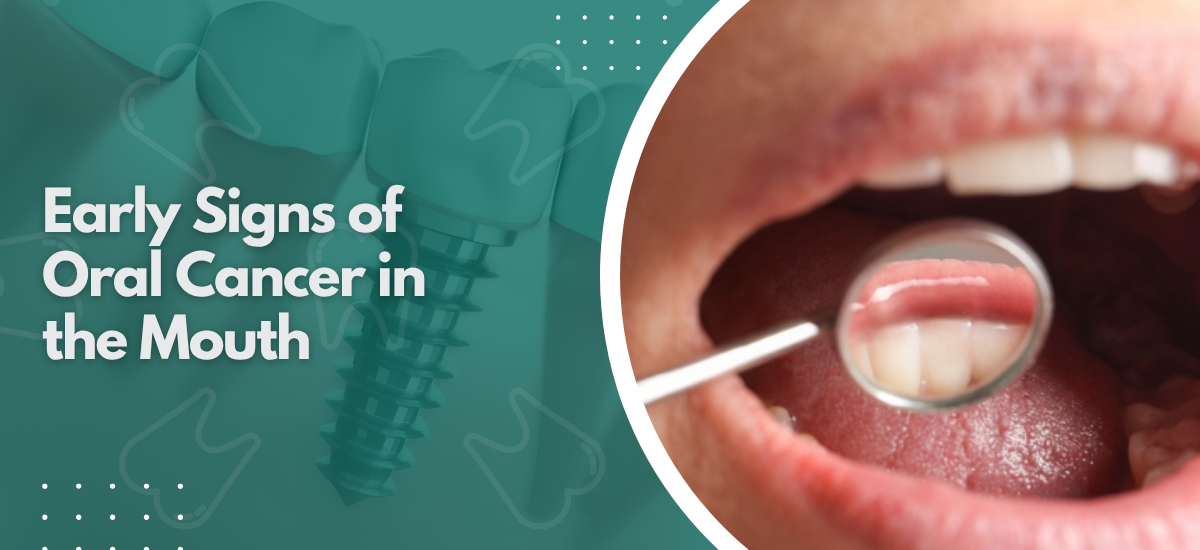
Early signs of oral cancer include persistent sores or ulcers that don’t heal within two weeks, white or red patches on the gums, tongue, or inner cheek, unexplained bleeding in the mouth, lumps or thickening in the oral tissue, and difficulty swallowing or moving the jaw. Most early stage oral cancer is painless which is why patients frequently ignore it until it has progressed. Early detection significantly improves treatment outcomes and survival rates.
According to Dr. Suhrab Singh, renowned dentist in Noida, “oral cancer in its early stages rarely causes pain which is why patients delay seeking assessment until symptoms become severe and treatment becomes considerably more complex.”
What Are the Specific Early Warning Signs to Watch For?
These aren’t the kind of symptoms that feel like emergencies. That’s exactly the problem.
A Sore That Won’t Go Away: Two weeks is the threshold. A mouth ulcer from a bite injury or food irritation heals within that window and one that doesn’t needs clinical assessment, which is where oral cancer detection becomes relevant because early stage lesions caught at this point have substantially better outcomes than the same lesion found six months later.
White or Red Patches: White patches are called leukoplakia. Red ones are erythroplakia. Both appear on the tongue, gums, or inner cheek and neither can be assessed as benign or malignant without a biopsy regardless of how minor they look to the person examining their own mouth in a bathroom mirror.
Bleeding With No Cause: Gum disease causes bleeding. Trauma causes bleeding. But bleeding that keeps happening with no identifiable source, no injury, no gum problem, that’s a different category and it warrants investigation rather than self treatment with whatever’s under the bathroom sink.
Something New in the Tissue: A lump inside the mouth, on the lip, or a swollen lymph node in the neck that appeared without explanation and is still there three weeks later needs to be looked at by someone who knows what to look for because lymph node involvement is how oral cancer spreads before the primary site becomes obvious.
Swallowing or Speaking Changes: When it becomes uncomfortable to swallow, the tongue feels restricted, or speech shifts without a cold or obvious cause to explain it, the functional change can indicate tumour involvement in areas that a patient simply can’t see during self examination.
Early assessment using imaging tools like dental radiology identifies abnormalities in oral tissue before they become visible or symptomatic at the surface.
Who Is at Higher Risk and What Should They Do?
Risk isn’t evenly distributed. Some patients need screening far more often than others.
Tobacco in Any Form: Cigarettes, bidis, gutka, pan masala. The risk compounds with years of use and doesn’t reset quickly after stopping, meaning someone who smoked for twenty years and quit five years ago still carries a meaningfully elevated risk compared to someone who never used tobacco at all.
Heavy Alcohol Use: An independent risk factor on its own and a multiplier when combined with tobacco rather than just adding to it, so the combined risk is considerably higher than either substance creates separately, which is why patients who use both need more frequent oral screening rather than just annual checks.
HPV: Human papillomavirus, specifically HPV 16, is now a significant cause of oropharyngeal cancers in patients with no tobacco or alcohol history whatsoever and awareness of this is particularly relevant for younger patients who don’t consider themselves at risk based on lifestyle.
Sun Exposure Over Decades: Lip cancer specifically. Patients who work outdoors without lip protection across a working lifetime accumulate UV damage to the lip mucosa that increases malignancy risk in a way that’s separate from the intraoral risk factors most people associate with oral cancer.
Previous Oral Cancer: Remission is not the same as no longer being at risk. Patients who’ve had oral cancer treated carry a higher lifetime probability of a second primary tumour and need structured ongoing surveillance rather than assessment only when something new appears and prompts concern.
For patients already managing complex dental conditions, understanding how oral health monitoring fits into broader treatment planning is covered in the context of full mouth rehabilitation and why comprehensive clinical assessment matters across all aspects of oral health simultaneously.
Why Choose Neo Dental Care?
Neo Dental Care includes oral cancer screening as part of its comprehensive dental assessment, led by Dr. Suhrab Singh, NABH accredited dentist and recipient of the Best Dentist in Noida award at the National Quality Achievement Awards 2020, with clinical experience across diagnostics, oral medicine, and restorative dentistry.
Patients have had findings picked up here during routine appointments that they hadn’t noticed and weren’t looking for. A symptom you haven’t noticed isn’t the same as nothing being there. That’s the whole point of screening.
