
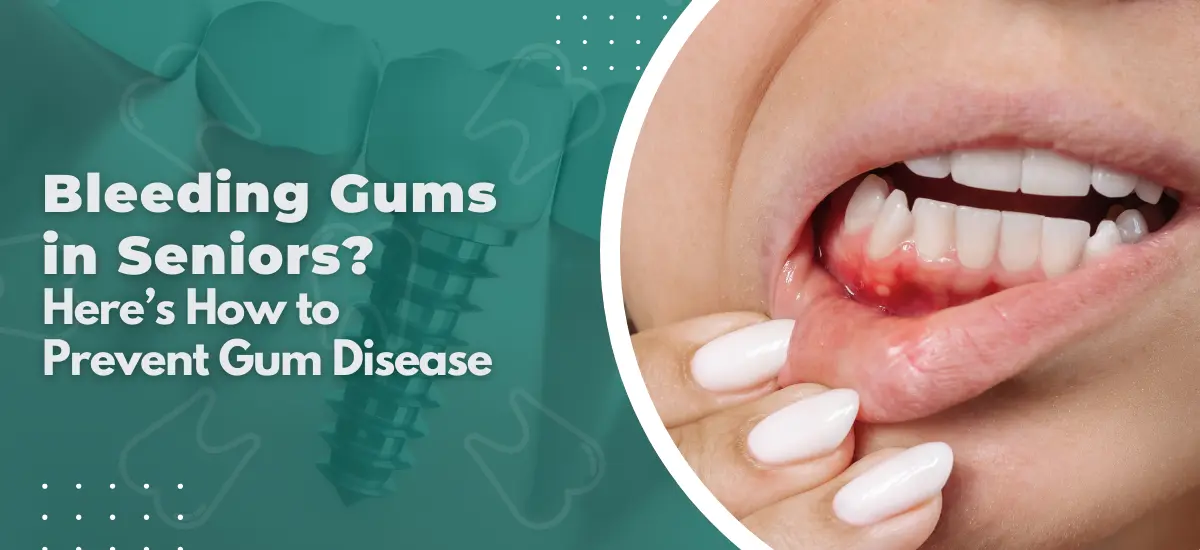
A case of bleeding gums can come up quite commonly in seniors and is usually the first symptom of gum disease that comes into manifestation. Just let it come, and you could end up with some scary problems, like losing teeth or worse health troubles. Being a dental clinic in Noida, we witness the struggles that seniors can have in maintaining their gums in the best conditions possible. The bright side of this issue is that gum disease can be prevented with proper dental care and a proper routine, and a visit to the dentist every now and then, of course, is mandatory.
We understand – the sight of blood in your brushes can be terrifying. But in order to remedy the situation, you have to understand what it is that’s causing it and what it means to your dental health. Bleeding gums are common in seniors because of factors that can be traced to medications you are taking, conditions like dry mouth, or gingivitis that has already gone awry. This is something that needs to be remedied sooner rather than later in order to ensure that your natural teeth stay in your mouth.
Therefore, what makes the case of bleeding gums especially harsh for seniors? Also, what can be done at home to maintain gum health? Let us discuss some tips on how to perform gum brushing for seniors with bleeding gums, how seniors can practice flossing techniques correctly, and when experts help is required from Dr. Suhrab Singh.
Why Bleeding Gums Are Common in Seniors

With age, several factors make the prevention of gum disease in the elderly difficult. Gum tissues become thinner as a person ages and thus become predisposed to inflammation and infection.
Elderly patients often have to take multiple prescription and over-the counter medications, such as blood-pressure or heart medications. The sad fact is that these medications lead to dry mouth, causing a lack of saliva in the mouth to wash away bacteria and food particles. Plaque rapidly develops when there’s a lack of saliva.
Arthritis, among other conditions, makes it challenging for older people to brush and floss effectively. As a result, when plaque accumulates, it irritates the gums and makes them bleed.
Hormonal changes following menopause can also make tissues of the gum more sensitive. If you wear dentures, poor fit or failure to clean them well can further irritate gums.
Watch for signs that bleeding gums could be turning into full-blown gum disease:
1. Swelling or tenderness of the gums
2. Bleeding when you brush or floss
3. Bad breath that won't go away
4. Gums that are pulling away from your teeth
4. Loose teeth
These are followed by other factors such as diabetes. When your body cannot fight an infection as well, the prevention of gum diseases among seniors becomes tricky, and bleeding gums tend to last longer than they are supposed to.
What Bleeding Gums Mean for Gum Health

If you see bleeding in your gums, that is the red flag that your body is waving at you pertaining to the condition of your gums. When you see bleeding when you brush and floss, that is a signal that the inflammation of the gums is already happening.
In most cases, when you bleed gums, you can be sure you have Gingivitis, which is the least advanced form of periodontal disease because plaque builds up along your gum line, making your gums swollen, sore, and sensitive. However, the bright side here is you can reverse this condition if you take the appropriate care.
Ignore it, and it can quickly lead from gingivitis to periodontitis, which means that an infection can work its way into the bone and ligaments that hold your teeth in place, causing them to recede or even fall out.
Watch for these warning signs of gum disease:
1. Bleeding with every brushing or flossing
2. Redness, swelling, or soreness of gums
3. Gums pulling back, making teeth appear longer
4. Irritation of gums or soreness
5. Sensitivity around the gumline
The amount your gums bleed makes a difference. If it is minor and only after you have switched up your brushing or flossing, then it probably is no big deal. On the other hand, if the bleeding occurs consistently and/or comes out of nowhere, you could be dealing with an honest-to-goodness gum infection that needs your attention. Most of the time, the formation of plaque is actually the culprit in bleeding gums among seniors. Once plaque solidifies into tartar, then the bacteria just have a field day, furthering inflammation. Unless you step in with a good dental care routine, or maybe some professional help, that cycle just keeps on going.
How Seniors Can Prevent Gum Disease at Home
Want to stop gum disease and bleeding gums in their tracks? For seniors, the best ways to prevent gum disease lie in daily habits.
Daily Essentials
Eradicate plaque before it mineralizes into tartar by brushing with fluoride toothpaste twice daily. Use a soft-bristled toothbrush; point the bristles along the gumline and move them in small, circular motions. Once a day, use either flossing or interdental brushes to clean bits of food and plaque from between your teeth – places your toothbrush cannot reach.
Dealing with Dry Mouth
If dry mouth is a problem, you have a greater risk of tooth decay and gum trouble. Try these tips:
1. Sipping water throughout the day
2. Chew sugar-free gum to keep saliva flowing
3. Ask your dentist about saliva substitutes
4. Avoid those alcohol-containing mouthwashes because they dry your mouth out even more.
|
Practice |
Benefit |
|
|
|
|
|
|
Ready to protect your gums at home? Book a consultation at Neo Dental Care Noida for personalized prevention tips and oral care routine.
Brushing and Oral Care for Seniors
But for cleaning, we recommend brushing your teeth with a soft-bristled brush at least twice a day—it won’t irritate your gums but is effective enough for cleaning purposes. When cleaning your teeth, soft is the way to go.
Electric toothbrushes may be a game-changer for people who have arthritis and have difficulty brushing because of shaky hands. These toothbrushes make it easy to remove plaque and have timers to ensure the right amount of time is spent brushing.
Daily flossing is essential in preventing periodontal disease in seniors. Regular floss can be used, but if it is difficult to manage, floss picks can be more easily handled.
For larger gaps between the teeth or dental work, nothing works better than interdental brushes. These go between the teeth, displacing any food particles that may be lodged there.
If traditional floss or brushes prove to be a problem, it would be worth exploring a water flosser. These are systems which use a current of water to remove debris around teeth and gums, which is especially useful around gums which bleed or where there is a lack of dexterity.
Useful oral health items for seniors:
1. Soft-bristled or electric toothbrush
2. Fluoride-containing tooth
3. Dental floss or picks
4. Interdental brushes
5. Water flosser (if required)
While brushing or flossing your teeth, you should use circular motions. Don’t press the teeth too hard; otherwise, the gums will become irritated. You should hold your brush at a 45-degree angle. Consistency always trumps intensity. Find what dental hygiene routine feels right for you and stick with it, adjusting as needed for comfort and any physical limitations you may have.
When Seniors Should See a Dentist for Bleeding Gums

When gum bleeding persists for longer than two weeks, despite careful brushing and flossing, it’s a sign that you need to visit your dentist. Taking proactive measures can save you from more serious problems in regards to gum disease, particularly among seniors who want to avoid dental problems in the future.
Care for these following most urgently, see your dentist immediately if you notice:
1. Loose Teeth or Shifting Teeth
2. Pus or discharge around the gums
3. Suffering, Swelling, Makes Eating Hard
4. “Bad breath” which persists even after regular oral hygiene practices
5. Bleeding of gums with no identifiable reason
It’s vital to visit your dentist once every six months even if you’re feeling fine, as senior citizens. Dentists can detect early stages of gum diseases before you realize there’s anything wrong.
People who have diabetes, heart disease, or are taking blood thinners face a higher risk of developing gum problems. Senior citizens who belong to these groups should more often visit a dentist for their Gum Disease Prevention routine.
Try not to put off dental care because of anxiety or cost. Many dental offices offer payment plans and sedation for nervous patients. Treating bleeding gums early is usually easier, less painful, and more affordable than waiting until gum disease gets serious. Taking care of your dental routine as an elderly adult really pays off in the long run.
If bleeding gums persist beyond two weeks or include swelling, schedule a check-up with Dr. Suhrab Singh today for expert gum evaluation.
Still have questions buzzing in your mind? Let’s answer the most common ones next.
Frequently Asked Questions
Plaque buildup causes gingivitis, worsened by dry mouth or medications.
It signals early gum disease like gingivitis, risking periodontitis if ignored.
Brush gently twice daily, floss daily, rinse with salt water, and stay hydrated.
Use soft-bristle brush at 45-degree angle with short strokes, avoiding scrubbing.
If bleeding persists over two weeks, with swelling, pain, or spontaneous.
They help early stages, but professional scaling is needed for advanced cases.
