
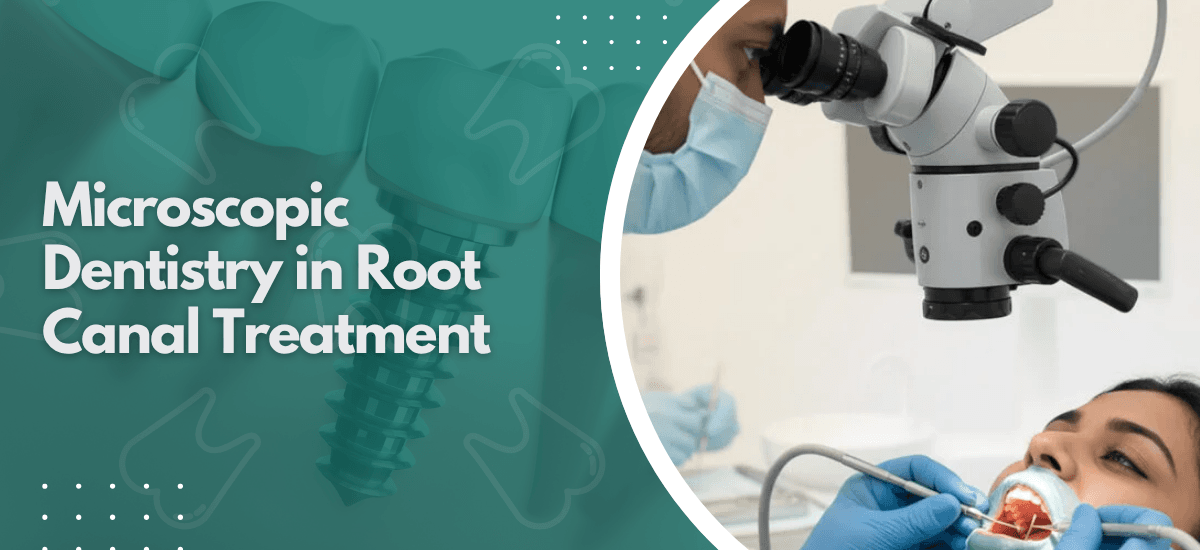
Microscopic dentistry uses high powered dental operating microscopes during root canal procedures to magnify the treatment field significantly. Clinicians can see missed canals, fractures, and calcified tissue that are completely invisible to the naked eye. Standard root canal treatment relies on tactile sense and limited visibility. Microscopic dentistry replaces that with direct visual confirmation at every step.
According to Dr. Suhrab Singh, renowned dentist in Noida, “a microscope during root canal treatment lets us see and treat what conventional methods simply cannot reach, which is where most long term failures actually begin.”
What Does a Dental Microscope Actually Do During Root Canal Treatment?
Most patients don’t realise how limited visibility is during a conventional root canal and the microscope fixes that problem directly.
Magnification Changes Everything: Dental operating microscopes provide between 4x and 26x magnification, so working inside a root canal that’s often less than 1mm wide becomes something the clinician can actually see rather than navigate by feel, which is where microscopic dentistry fundamentally changes the standard of care compared to conventional endodontic treatment.
Light Goes Where It Needs To: Coaxial illumination built into the microscope directs light straight down into the canal with no shadows and no guessing about depth or curvature, giving the clinician a clear view of the full canal path before any instrument enters the tooth.
Missed Canals Get Found: A significant portion of root canal failures come down to canals that were never located in the first place, and under the microscope those additional canals become visible before the appointment ends rather than after the infection returns months later.
Cracks Get Identified Early: Vertical root fractures are almost never visible without magnification and catching one before starting treatment changes the entire clinical decision, from whether the tooth can be saved to whether extraction is actually the right call before any work begins.
The Seal Gets Confirmed: At high magnification the clinician can see whether obturation material has filled without voids, which is a level of confirmation that simply doesn’t exist in conventional treatment where the final seal gets assessed on feel alone.
The distinction matters considerably when choosing where to get root canal treatment because the same procedure name covers a very different clinical experience depending on what the treating clinician can actually see during it.
Who Actually Needs Microscopic Root Canal Treatment?
Not every root canal requires a microscope but some cases genuinely can’t be done well without one.
Retreatment Cases: When a previous root canal has failed the canal system often contains old filling material, ledges, or separated instruments sitting deep inside and finding those without magnification is largely guesswork that carries a real risk of making things worse rather than better.
Calcified Canals: Age and chronic inflammation narrow canals over time until they’re nearly closed and negotiating a calcified canal without being able to see where you’re going risks perforating the root, which ends the tooth entirely rather than saving it.
Complex Molar Anatomy: Molars regularly have four or five canals rather than the assumed three, and the missed canal is usually what brings the patient back in pain six months after a supposedly completed treatment rather than anything that went wrong with the work that was actually done.
Ongoing Pain After Completed Treatment: Patients with persistent symptoms after a finished root canal typically have either a missed canal or an undetected fracture, and the microscope identifies which one rather than leaving the cause as something to be speculated about and treated repeatedly without resolution.
High Stakes Restorations: When a tooth is carrying a crown or anchoring a bridge, precision at the root canal stage directly determines how long that restoration holds and what happens to everything built on top of it if the underlying treatment fails to address the full canal system.
Before making decisions about dental treatment based on cost or clinic location alone, understanding how precision based preventive care also changes outcomes is useful, and our coverage of Swiss AirFlow teeth cleaning explains how the same principle of clinical precision applies to routine care and why the clinical environment matters at every stage of treatment.
Why Choose Neo Dental Care?
Neo Dental Care offers microscopic dentistry as a standard part of its root canal protocol, led by Dr. Suhrab Singh, NABH accredited dentist and recipient of the Best Dentist in Noida award at the National Quality Achievement Awards 2020, with extensive clinical experience across endodontics, implantology, and restorative dentistry.
Patients referred here for retreatment consistently report that the microscope identified something their previous clinician hadn’t found. That’s not a rare outcome. It’s what happens when you can actually see what you’re treating rather than working from feel and a two dimensional X-ray alone.
