
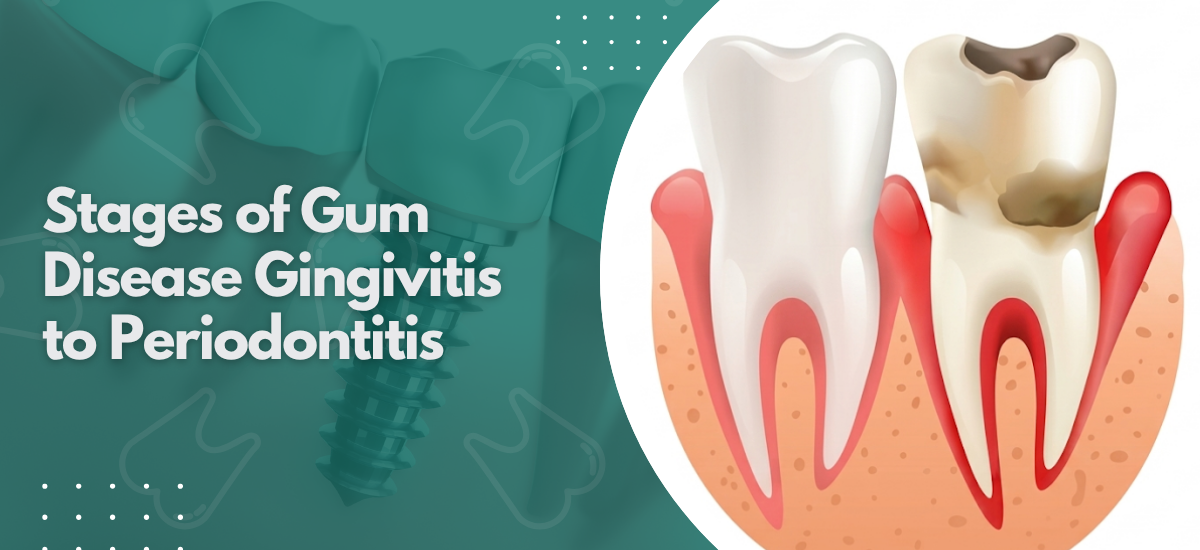
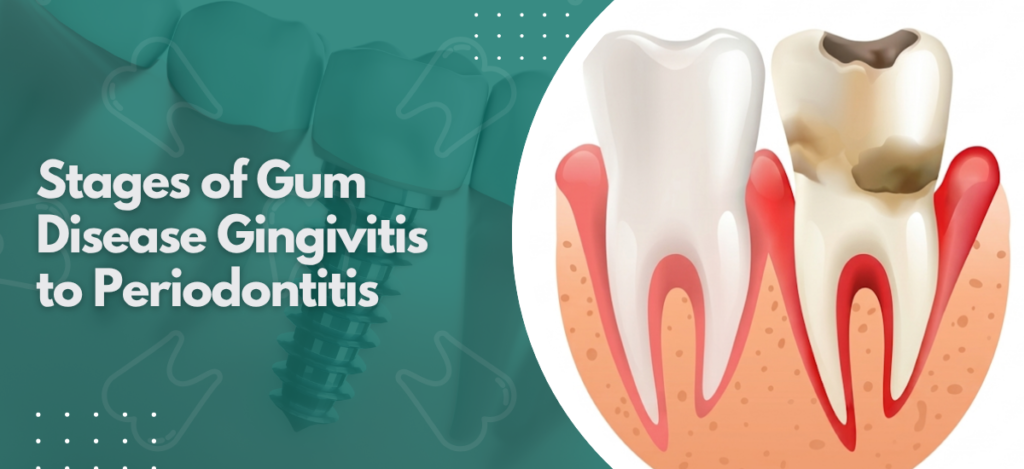
Gum disease progresses through four main stages starting with gingivitis, which is fully reversible, and advancing through early, moderate, and severe periodontitis as the infection moves deeper below the gumline and causes permanent damage to the bone and tissue supporting the teeth. A faster progressing form called aggressive periodontitis can also develop, particularly in younger patients. Each stage causes more structural destruction than the previous one and the treatment required becomes more complex the further the disease has advanced before it’s addressed.
According to Dr. Suhrab Singh, renowned dentist in Noida, “most patients with early gum disease have no pain at all which is why they don’t come in, and by the time there’s discomfort the disease has usually moved well past the stage where simple treatment is enough.”
What Are the Stages of Gum Disease and What Happens at Each One?
Each stage involves more destruction than the last and the treatment required at each one is more involved than what would have been needed at the stage before it.
Gingivitis: Plaque along the gumline causes redness, swelling, and bleeding on brushing, but because bone hasn’t been affected yet a professional cleaning combined with better home care is enough to reverse it completely without anything more complex being needed.
Early Periodontitis: Infection goes below the gumline and starts destroying the ligament connecting tooth to bone while pockets form and deepen, which is when gum treatment becomes necessary because the damage happening at this depth doesn’t reverse on its own regardless of how well the patient cleans at home.
Moderate Periodontitis: Pockets are now deep enough to show measurable bone loss on X-ray and some teeth start feeling mobile, and scaling and root planing alone may not be sufficient to control the bacterial activity without additional intervention.
Severe Periodontitis: Significant bone is gone, pockets are too deep to clean reliably even professionally, teeth are visibly mobile, and some patients lose teeth at this stage without ever having experienced what they’d describe as real pain.
Aggressive Periodontitis: A faster moving form that appears in younger patients with relatively little plaque to explain the destruction rate, signalling that the immune response to the bacteria is working differently and that the treatment approach needs to reflect that.
Biofilm control underpins management at every stage and how Swiss AirFlow painless scaling clears subgingival biofilm more thoroughly than conventional instruments changes what’s achievable between appointments for patients managing active or previously treated gum disease.
What Determines How Quickly Gum Disease Progresses?
The rate at which gum disease progresses varies considerably between patients and certain factors consistently accelerate it in ways that aren’t always obvious from the outside.
Oral Hygiene at Home: Plaque left undisturbed below the gumline keeps the disease moving forward, and patients who clean consistently and properly do slow progression in ways that show up as measurable pocket depth improvements at clinical appointments rather than just in how the gums look on the day.
Smoking: Nicotine cuts blood flow to the gums and suppresses the bleeding that usually signals active disease, so smokers frequently arrive at more advanced stages because the warning was being hidden the whole time and their treatment response is consistently worse than non-smokers at equivalent severity.
Systemic Conditions: Diabetes and periodontitis worsen each other in both directions, meaning patients carrying both need their gum health treated as part of the broader medical picture rather than as a separate dental concern sitting independently alongside everything else.
Genetics: Some patients mount a more intense inflammatory response to periodontal bacteria than others and develop serious bone loss even with relatively low plaque levels, which is why family history of tooth loss or gum problems is clinically relevant rather than just background information.
Stress and Immune Function: Prolonged stress suppresses immune function and gives periodontal bacteria more room to cause damage, and patients going through difficult extended periods often show measurable acceleration in progression that settles once the stressor resolves and treatment resumes properly.
Gum disease that progresses to the point of causing tooth loss creates a whole separate chain of problems and the full picture of what follows is covered in the context of what an untreated missing tooth does to the jaw over time.
Why Choose Neo Dental Care?
Neo Dental Care offers comprehensive periodontal assessment and gum disease treatment across all stages including scaling, root planing, surgical intervention, and Swiss AirFlow GBT maintenance, led by Dr. Suhrab Singh, NABH accredited dentist and recipient of the Best Dentist in Noida award at the National Quality Achievement Awards 2020.
Patients who come in at gingivitis leave with a cleaning and a maintenance plan while patients who arrive at severe periodontitis leave with something considerably longer and more expensive ahead of them, and the disease was already there in both cases well before the second group showed up which is genuinely the only thing separating the two outcomes.
