
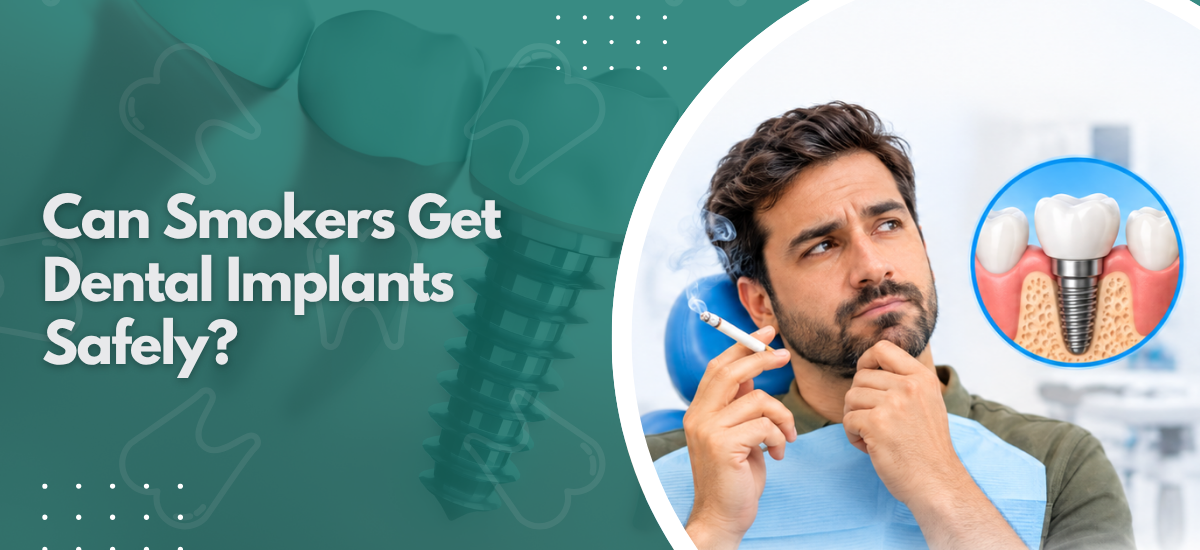
A smoker can usually get an implant, though it’s a bigger gamble than it is for a non-smoker. The more you smoke, and the longer you’ve done it, the less likely the implant is to succeed. Cutting down or stopping around the surgery brings much of that risk back down.
According to Dr. Suhrab Singh, Dentist in Noida, “An implant needs a good blood supply to bond with the jawbone. Smoking narrows the small blood vessels, so the bone heals slowly and the implant gets a weaker start.”
How Does Smoking Affect Dental Implants?
Smoking and dental implants don’t go well together because of healing. The bone needs a few months to grow around the post, and smoke gets in the way.
- Reduced Blood Flow: Every cigarette narrows the blood vessels in your gums for a while. A fresh wound needs good blood flow, and it doesn’t get it.
- Weaker Bone Bonding: The implant only works if the bone fuses to it, a process dentists call osseointegration. In smokers it often doesn’t hold as well, and the implant can fail.
- More Gum Infection: Smoking dries out the mouth and upsets the balance of bacteria. That makes an infection around the implant easier to get.
- Wound Problems: Smoke irritates the stitches. A gum that opens up can leave the implant exposed.
This page on dental implant treatment in Noida explains how the procedure is done.
What Are the Risks and Warning Signs for Smokers?
Some smokers do fine and others don’t. How much you smoke and how long you have been smoking both count for a lot.
- Early Failure: Within the first few months, an implant can fail to fuse and begin to feel loose. This is the most common way a smoker’s implant is lost.
- Bone Loss Around the Implant: Bone can slowly shrink away from the implant. It rarely hurts, and usually an X-ray is the first thing to show it.
- Peri-implantitis: Red, swollen gums around the implant, bleeding or a bad taste can mean infection. It’s easier to control if it’s caught early.
- Heavy Smoking: Someone who smokes a pack a day faces more risk than someone who smokes occasionally. Cutting back helps even if you can’t quit.
Knowing the early signs helps. This guide lists the warning signs of implant rejection.
How Can Smokers Improve Implant Success?
Dental implants for smokers work best when you plan ahead. Mostly that means stopping, or at least cutting back, around the time of surgery.
- Quit Before Surgery: If you can, stop smoking a few weeks before surgery. How long exactly is something your dentist will decide.
- Stay Off Smoke While Healing: Those first weeks after surgery are the riskiest. Staying smoke-free then gives the bone its best chance to bond.
- Clean Carefully: Brush softly and floss around the implant every day, and use any rinse you’re given. Plaque is harder on gums that already struggle, so don’t let it build up.
- Attend Every Check-Up: Don’t skip follow-up visits, because X-rays can pick up bone loss early. If you’ve gone back to smoking, let your dentist know.
Long-term care matters as much as the surgery. For daily habits, read this guide on how to care for dental implants long term.
Key Takeaways: Smokers can have implants, but they heal slower and fail more often. The heavier the smoking, the higher the risk, and stopping around surgery helps. Good oral hygiene and regular check-ups matter too.
Frequently Asked Questions
You usually can. The dentist looks at your gums, bone and smoking habit first. You should expect a higher risk of implant failure than a non-smoker and may need to take extra precautions.
They do, since the damage comes from nicotine. A vape or chewing tobacco carries it just like a cigarette.
Plan on a few weeks at the very least. Your dentist may ask for more if your gums or bone need it.
Yes. If smoking continues, the gums around the implant can get infected and the bone can wear away. Check-ups catch it while it’s still easy to treat.
Disclaimer
This blog is for educational purposes only and is not a substitute for a professional dental evaluation.