
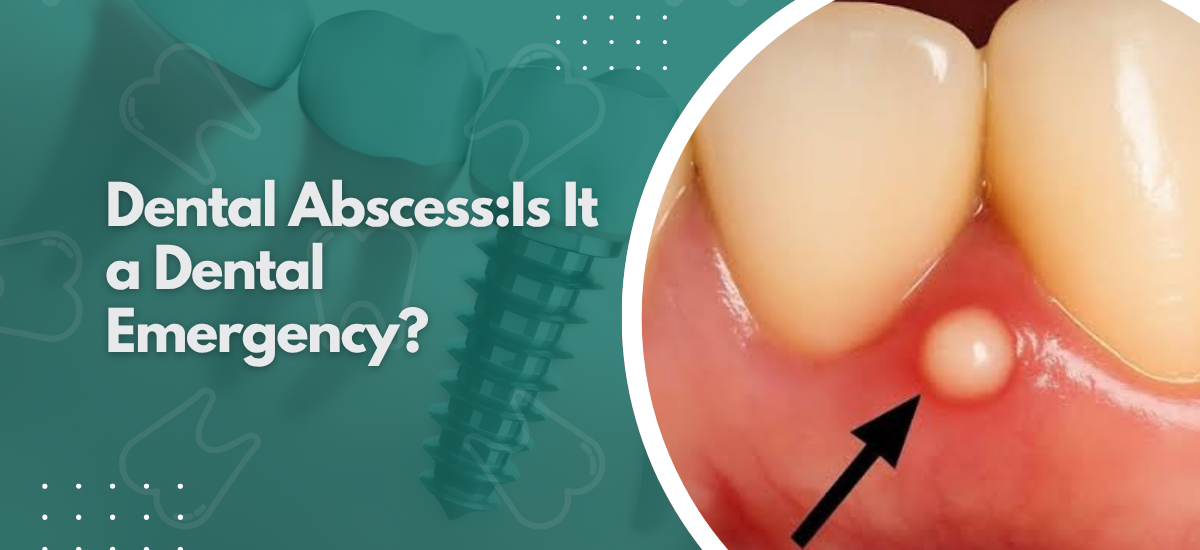
Yes, a dental abscess is a serious medical emergency. It is a trapped pocket of bacteria and pus that destroys tissue and bone from the inside. It will not heal on its own. If left untreated, the infection spreads from the tooth into the jaw, face, neck, and in severe cases the brain or bloodstream, causing sepsis, a life-threatening whole-body infection response. A dental abscess that seems manageable in the morning can become a hospital admission by evening if the swelling moves in the wrong direction. Same-day dental treatment is not optional. It is what keeps the problem contained.
According to Dr. Suhrab Singh,One of the best dentist in Noida, “Patients often wait with a dental abscess because the pain comes and goes, or because it seems to drain and the pressure reduces. That reduction in pain is not recovery, it is the abscess finding a temporary exit while the bacterial source stays active inside the tooth. The infection is still there. It will build again. And the longer it sits, the more tissue and bone it destroys, and the harder the eventual treatment becomes. A dental abscess needs to be seen the same day it is identified.”
Tooth pain with swelling? Do not wait. Book an emergency assessment with a dentist.
Why Is a Dental Abscess Dangerous and What Makes It an Emergency?
Most tooth pain is uncomfortable but not dangerous. An abscess is in a different category entirely.
- It will not go away on its own: An abscess is an enclosed pocket of infected material under pressure. The bacterial source sits inside the tooth in the pulp, the root, or the surrounding bone and continues producing infection regardless of what the patient takes for pain. Antibiotics reduce the inflammatory response and buy time. They do not eliminate the source. Without treating the tooth itself, the infection returns every time the antibiotics stop.
- Spread to the jaw and neck happens fast: Dental infections travel along the path of least tissue resistance. From a lower molar, that path leads directly into the fascial spaces of the jaw and neck. From there, infection can descend into the chest a condition called descending necrotising mediastinitis with a reported mortality rate of up to 40% even with aggressive treatment. The speed at which this progression happens is the reason an abscess cannot be left for days while waiting for a routine appointment.
- Sepsis is a real risk: Bacteria from a dental abscess entering the bloodstream can trigger sepsis the body’s dysregulated response to infection that causes multiorgan failure. Clinical literature documents deaths from dental abscesses progressing to sepsis and airway obstruction in patients who delayed treatment. This is not a rare theoretical complication. It is the documented endpoint of untreated dental infection in a subset of patients.
- The abscess draining does not mean it is resolved: When an abscess drains spontaneously through the gum, through a sinus tract, or in some cases through the skin the pressure and pain reduce suddenly. Many patients interpret this as the infection clearing. It has not. The bacterial source is still active. The drainage pathway closes, pressure rebuilds, and the abscess returns. Spontaneous drainage without treating the tooth buys days, not resolution.
How the root canal procedure treats the source of a dental abscess clearing the infected pulp, sealing the canals, and eliminating the bacterial reservoir that feeds the abscess is covered on our root canal treatment in Noida page.
When Does a Dental Abscess Need Hospital Emergency Care Rather Than a Dentist?
Most dental abscesses are managed at the dental clinic. Some have already progressed beyond that point.
- Go to a hospital emergency department immediately if: Swelling has moved toward the neck or is visible below the jawline. There is difficulty swallowing or the throat feels tight. Breathing has become laboured or noisy. The mouth cannot be opened more than a finger-width. There is a high fever above 38.5 degrees Celsius with chills. Extreme fatigue, confusion, or rapid heartbeat alongside facial swelling. These are signs the infection has reached the deep tissue spaces of the neck or the bloodstream. A dental clinic cannot manage this it needs hospital-level care with intravenous antibiotics and surgical drainage.
- Go to a dentist the same day if: There is visible swelling of the gum or face that was not there yesterday. A gum boil, pimple-like bump on the gum, or visible pus. Severe throbbing tooth pain that does not settle with over-the-counter pain relief. Sensitivity to temperature that has escalated to constant spontaneous pain. Swelling that is present but localised to the tooth and jaw area with no neck involvement and no fever. These still require same-day assessment, not a wait-and-see approach.
- What treatment involves: For a localised abscess, the dentist drains the infection by opening the tooth or making a small incision in the gum, prescribes antibiotics for the surrounding infection, and plans definitive treatment root canal to save the tooth or extraction where the tooth is non-restorable. CBCT imaging confirms the extent of periapical bone destruction before treatment is planned. The source of infection must be eliminated, not just managed with antibiotics.
- What not to do while waiting for an appointment: Do not apply heat to the face it increases blood flow and can accelerate spread of the infection. Do not take someone else’s leftover antibiotics without clinical direction. Do not assume the pain reduction means the abscess has resolved. Keep the appointment, take prescribed medication as directed, and return immediately if swelling increases toward the neck or swallowing becomes difficult.
How a root canal infection which is one of the most common causes of a dental abscess develops, and what happens when it goes untreated for months or years, is covered in our blog on what causes root canal infection years later.
Why Choose Dr. Suhrab Singh at Neo Dental Care?
Dr. Suhrab Singh is an MDS-qualified endodontist at Neo Dental Care, Noida NABH-accredited, inside Neo Hospital, Sector 50 He is the recipient of National Quality Achievement Award 2020, with over 15,000 root canal procedures under dental operating microscopes. Emergency dental abscess cases are assessed with CBCT 3D imaging to confirm the extent of infection before treatment. Drainage, root canal treatment, and prescription management are available in the same appointment where clinically appropriate. Patients presenting with facial swelling are seen as a priority.
Frequently Asked Questions
Yes. A dental abscess is a serious medical emergency that will not heal on its own and can spread to the jaw, neck, brain, or cause sepsis if left untreated. Same-day dental treatment is required. If swelling extends toward the neck or difficulty breathing develops, go to a hospital emergency department immediately.
Swelling moving toward the neck or under the jaw, difficulty opening the mouth or swallowing, fever above 38 degrees Celsius, difficulty breathing, hoarseness, extreme fatigue, confusion, or rapid heartbeat. Any of these alongside a known abscess needs emergency hospital care, not a dental appointment.
No. A dental abscess will not heal without treatment. If it appears to drain and the pain reduces temporarily, the bacterial source is still present and the infection will return. Antibiotics alone do not eliminate an abscess the source of infection in the tooth needs to be treated with root canal treatment, drainage, or extraction.
Yes. Neo Dental Care provides same-day emergency assessment for dental abscesses including drainage, root canal treatment, and prescription management. CBCT imaging is available to confirm the extent of infection before treatment. Patients presenting with facial swelling or signs of spreading infection are seen as a priority.
Reference:
- https://pmc.ncbi.nlm.nih.gov/articles/PMC3858730/
- https://pmc.ncbi.nlm.nih.gov/articles/PMC7834778/
Desclaimer:
This blog is for informational purposes only and does not constitute professional dental advice. Please consult a qualified dental professional for a diagnosis and personalised treatment plan.