
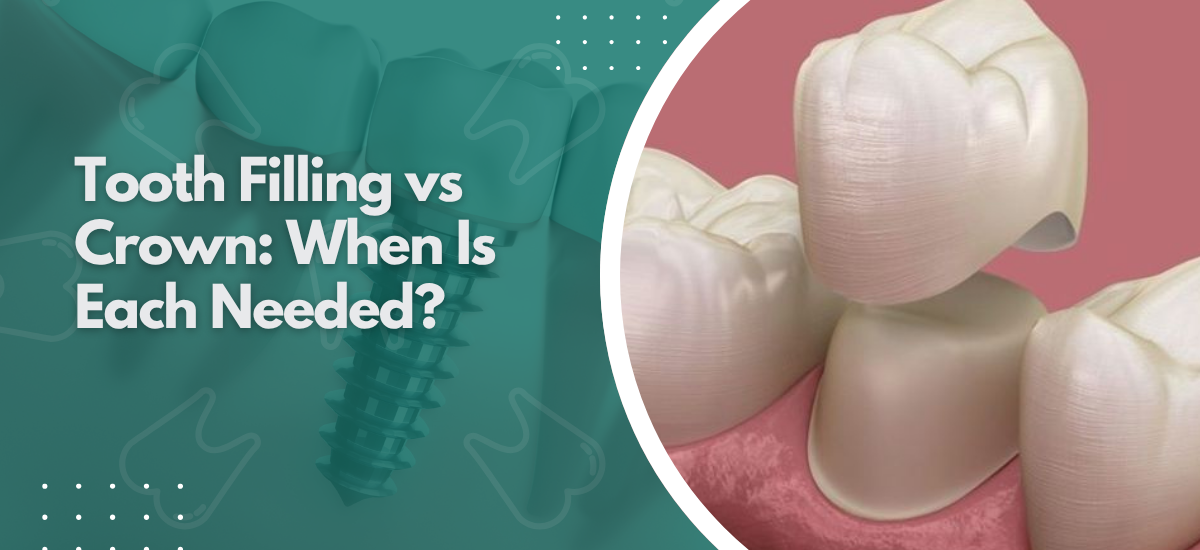
Tooth fillings restore small to moderate cavities by removing decay and sealing the defect with composite resin or amalgam while preserving maximum tooth structure, whereas crowns provide full-coverage restoration for severely compromised teeth, extensive carious lesions, or endodontically treated teeth requiring complete structural protection. Fillings are indicated when sufficient sound tooth structure remains to support the restoration, while crowns become necessary when extensive tissue loss would result in restoration failure under functional loads, requiring evaluation from a dentist in Noida to determine the appropriate restorative approach.
Dr. Niharika Singh, experienced dentist at Neo Dental Care with 5+ years in restorative dentistry, explains:
“The filling versus crown decision is based on remaining tooth structure assessment. Minor to moderate carious lesions affecting approximately one-third of the tooth can be successfully restored with conservative intracoronal restorations preserving natural tissue. However, extensive decay compromising more than 50% of tooth structure, deep fractures, or post-endodontic teeth require full-coverage crowns to prevent catastrophic failure under occlusal forces. The analogy is apt – minor defects receive targeted repair, while major structural compromise necessitates complete reconstruction.”
Tooth filling or crown? Get the right restoration advice at Neo Dental Care today.
What Are the Key Differences Between Fillings and Crowns?
Both restore damaged teeth but they’re vastly different approaches tackling different severity levels once you know what splits them apart.
|
Comparison Factor |
Tooth Filling |
Dental Crown |
|
Tooth Damage Level |
Small to moderate cavities |
Severe decay, large fractures |
|
Tooth Structure Preserved |
Maximum, removes only decay |
Less, requires significant shaping |
|
Coverage Area |
Fills cavity hole only |
Covers entire visible tooth |
|
Durability |
5-10 years depending material |
10-15+ years with proper care |
|
Cost |
₹1,500-4,000 per filling |
₹5,000-15,000 per crown |
|
Appointments Needed |
Single visit, done same day |
2-3 visits over 2-3 weeks |
|
Best For |
Early cavities, minor chips |
Root canal teeth, large decay, cracked teeth |
|
Protection Level |
Moderate, fills hole only |
Maximum, shields entire tooth |
- Amount of Tooth Removal
Fillings are conservative – dentist removes only decayed portion leaving maximum healthy structure intact. The prep involves drilling out rotten tooth tissue, shaping the cavity for retention, bonding filling material into the cleaned space. Most of your original tooth stays untouched. Crowns demand aggressive reduction – dentist shaves tooth down from all sides creating a smaller peg that crown sits over like a cap. You lose significant healthy tooth structure creating room for crown thickness, roughly 1-2mm removed around entire tooth. - Coverage and Protection
Fillings plug holes but don’t protect the whole tooth from future damage. The filled area is strong but surrounding natural tooth can still crack, chip, or develop new decay elsewhere. Crowns encase the entire visible portion creating 360-degree armor protecting all surfaces from fracture and decay. The crown takes all biting forces distributing them evenly across the whole tooth instead of concentrating stress at weak points like fillings do. - Longevity and Replacement
Composite fillings last 5-7 years on average before wearing down, staining, or pulling away from tooth margins needing replacement. Amalgam fillings push 10-15 years. Crowns built from porcelain fused to metal or full ceramic last 10-15+ years easily, some surviving 20-30 years with proper care and good oral hygiene. The superior durability justifies higher upfront cost when you calculate cost per year of service. - Procedure Complexity
Fillings are straightforward single-visit procedures – numb, drill, clean, fill, shape, polish, done in under an hour. Crowns span multiple appointments – first visit preps tooth and takes impressions, temporary crown protects tooth while lab fabricates permanent one (1-2 weeks), second visit removes temporary and cements permanent crown checking fit and bite. The complexity and lab involvement explain why crowns cost way more than fillings.
Understanding these massive splits helps gauge which restoration your situation demands. Getting checked at a solid dental clinic gets X-rays showing decay extent, visual exam assessing remaining tooth structure, honest discussion whether filling holds or crown’s necessary preventing future fracture.
Not sure whether you need a filling or crown? Book a consultation at Neo Dental Care now.
When Should You Choose Fillings Over Crowns?
Clinical indications determine the appropriate restorative approach based on remaining tooth structure and functional requirements.
- Small to Moderate Carious Lesions
Decay affecting less than one-third of tooth structure is indicated for direct restoration. When carious involvement is confined to one or two surfaces with adequate surrounding sound tooth structure, composite or amalgam fillings provide sufficient strength and retention to withstand masticatory forces. Conservative intracoronal restorations are clinically and economically appropriate when tooth structure permits. - Anterior Teeth with Minor Defects
Small fractures or chips on incisors and canines are typically restored with direct composite bonding or resin restorations. Given the reduced occlusal loading on anterior teeth compared to posterior dentition, properly executed direct restorations demonstrate adequate longevity without requiring full-coverage crowns, maximizing tooth structure preservation. - Economic Considerations
Direct restorations range ₹1,500-4,000 versus indirect crowns at ₹5,000-15,000. For borderline cases where either restoration may be clinically viable, conservative treatment with fillings preserves both financial resources and tooth structure. Should the restoration fail, crown placement remains a future option. - Sufficient Remaining Tooth Structure
The clinical guideline indicates fillings when greater than 50% of coronal tooth structure remains intact. The “two-thirds rule” suggests direct restorations for lesions affecting less than two-thirds of the tooth, with crowns indicated for more extensive involvement. Adequate sound tooth structure provides necessary retention and resistance to prevent restoration failure.
Neo Dental Care utilizes intraoral imaging for precise damage assessment, provides evidence-based treatment recommendations, offers aesthetic composite and ceramic materials, and delivers restorative care ensuring optimal longevity.
Why Choose Neo Dental Care for Restorative Treatment?
Dr. Suhrab Singh leads Neo Dental Care with 12+ years specializing in restorative dentistry, offering same-day composite restorations, laser-assisted caries detection for early intervention, CEREC CAD/CAM single-visit crowns, and NABH-accredited care at Neo Hospital, Sector 50, Noida. The clinic provides objective clinical assessments regarding restoration selection, digital impression technology for enhanced comfort and accuracy, and high-aesthetic porcelain restorations – call +91 97557 12732 and let our team deliver appropriate restorative intervention based on 15,000+ successful procedures ensuring optimal clinical outcomes and longevity.
Preserve your tooth or protect it fully understand Fillings vs Crowns at Neo Dental Care.
Frequently Asked Questions
Yeah absolutely, if filling fails or more tooth breaks away you can crown it later, though it means paying twice total versus crowning upfront.
Nope, both use local anesthesia making procedures painless, though crown prep takes longer and temporary crown period might feel awkward before permanent fits.
Fillings last 5-10 years average, crowns push 10-15+ years, so crowns deliver better value long-term despite higher upfront cost.
Sometimes borderline cases work, but dentist’s honest – undersized fillings in huge cavities crack quickly wasting money, better crowning teeth needing it upfront.
References
-
- American Dental Association. (2023). “Fillings and Crowns.” ADA Patient Education Resources. Available at: https://www.ada.org
- National Institute of Dental and Craniofacial Research. (2024). “Dental Restorations.” NIDCR Clinical Guidelines. Available at: https://www.nidcr.nih.gov