
Pulpitis is inflammation of the dental pulp containing nerves and blood vessels, caused by bacterial infection leading to severe throbbing pain. A cavity affects only the outer enamel and dentin layers, while pulpitis occurs when untreated decay reaches the inner nerve tissue. The key difference is treatment: cavities need fillings, but pulpitis often requires root canal therapy to save the tooth.
Dr. Suhrab Singh, best dentist in Noida with over 15,000 root canal procedures at Neo Dental Care, says that,
“Lots of patients think they’ve got a basic cavity, then we find out it’s pulpitis. Catching it early changes everything. Get treatment before the nerve dies and you can save your tooth. Wait too long and extraction might be your only option.”
Dealing with wisdom tooth pain? Book your consultation at Neo Dental Care today.
How Does a Cavity Progress Into Pulpitis?
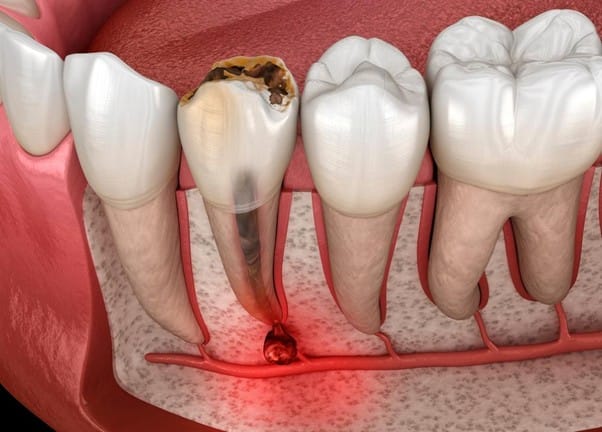
Decay doesn’t happen overnight. It’s this slow crawl starting at your tooth’s surface, working deeper and deeper through each layer till it finally hits the nerve inside.
- Enamel Breakdown
Your outermost layer starts breaking down when bacterial acids chew through the minerals. You won’t feel anything yet since enamel’s got no nerves, so decay moves in silently. Fluoride treatments can sometimes flip things around at this early stage. But ignore it and bacteria dig in deeper, making professional treatment the only way out. - Dentin Invasion
Once bacteria break through to the softer dentin underneath, sensitivity kicks in hard. Hot coffee, ice water, candy, they all trigger these sharp little zaps because dentin’s packed with tiny tubes connecting straight to your nerve. That’s your tooth screaming that decay just crossed a serious line and needs fixing now before things get worse. - Pulp Exposure
Skip treatment long enough and decay carves right into the pulp chamber. Bacteria flood the nerve tissue, inflammation fires up, and that’s when pulpitis officially starts with pain ramping up fast. Your tooth’s interior is basically a sealed box, so when swelling happens there’s nowhere for it to go. Pressure builds on that nerve and what was annoying becomes this pounding nightmare wrecking your sleep. - Irreversible Damage
Let inflammation sit too long and tissue starts dying. Blood flow gets choked off, infection takes over. What could’ve been reversible pulpitis fixable with a filling turns irreversible, needing a root canal treatment or extraction. The nerve’s toast at this point, can’t heal on its own. Skip treatment and infection spreads into the bone around your tooth, sometimes forming an abscess needing emergency care.
Regular checkups at a solid dental clinic catch problems before pulpitis even starts, saving you major pain and money.
What Are the Key Differences Between Cavities and Pulpitis?
Both come from decay but they’re totally different stages with their own symptoms and fixes. Knowing the gap helps you figure out what kind of care you actually need.
- Pain Intensity
Cavities give you mild sensitivity that disappears once the trigger’s gone, like ice cream or soda. Pulpitis hits different. Severe throbbing that sticks around for hours, wakes you up at night. Some folks describe it like a drummer pounding inside their jaw nonstop. Gets way worse lying down flat because blood rushes to your head and cranks up pressure on that inflamed nerve. - Reversibility
Catch a cavity early and your dentist drills out the rot, drops in a filling, done. Tooth saved, nerve fine. Pulpitis hits irreversible stage though? Nerve’s finished, can’t fix itself. Root canal becomes the only move to yank infected tissue and seal everything up. Reversible pulpitis exists but it’s rare, you’d need lightning-fast cavity treatment before permanent nerve damage locks in. - Diagnostic Signs
Cavities show up on X-rays as dark patches in enamel or dentin. Pulpitis looks different. Sensitivity tests show a nerve either freaking out or completely dead. Tap the tooth and you might get a sharp pain stab. Advanced cases bring swelling near the gumline, pus leaking out, clear signs infection jumped from pulp into bone meaning abscess territory needing urgent help. - Treatment Urgency
Got a cavity and crazy schedule? You can probably wait a few weeks, not ideal but not an emergency. Pulpitis though? Every day you wait risks abscess, facial swelling, infection hitting your bloodstream. Severe pain means same-day or next-day treatment isn’t optional, it’s mandatory. Otherwise you’re gambling with complications landing you in the ER instead of a dental chair.
Knowing these red flags means you move fast when needed. Neo Dental Care’s got the tech like CBCT scans and pulp tests to nail down exactly what’s happening, whether it’s a basic filling or serious root canal work.
Comparison Factor | Cavity | Pulpitis |
Affected Area | Enamel and dentin layers | Dental pulp with nerves and vessels |
Pain Type | Mild, temporary sensitivity | Severe, throbbing, persistent pain |
Duration | Seconds to minutes after trigger | Hours to days, worse at night |
Reversibility | Yes, with filling | Reversible only if caught super early |
Treatment | Dental filling, fluoride | Root canal therapy or extraction |
Urgency | Can wait weeks | Needs immediate attention |
Why Choose Neo Dental Care for Pulpitis and Cavity Treatment?
Dr. Suhrab Singh runs Neo Dental Care with 12+ years deep in endodontics and restorative work. The place is loaded with CBCT imaging for pinpoint diagnosis, dental microscopes making everything magnified during root canals, laser dentistry for cavity fixes that barely touch healthy tooth. Results come out painless and predictable. Sitting inside Neo Hospital at Sector 50, Noida, the clinic holds NABH accreditation. They run Swiss Air Flow tech for comfortable cleanings, digital X-rays cutting radiation down, biocompatible materials built to last years. Whether you’re dealing with early decay or nightmare pulpitis that failed treatment elsewhere, the team’s track record with 15,000+ successful root canals means your tooth’s in capable hands.
Frequently Asked Questions
Reversible pulpitis might settle if the cavity gets fixed fast, but irreversible pulpitis won’t heal alone and needs root canal or extraction.
Small cavities might take months or years reaching the pulp, aggressive decay with poor brushing could progress within weeks.
Modern procedures are comfortable with local anesthesia and advanced tech making it painless, nothing like old horror stories.
Nerve dies, abscess forms, bone loss starts, face swells, fever hits, worst case life-threatening infection spreads needing emergency hospital care.
References
- American Association of Endodontists. (2023). “Pulpitis: Diagnosis and Treatment.” AAE Position Statement on Pulpal Diagnosis. Available at: https://www.aae.org
- National Institute of Dental and Craniofacial Research. (2024). “Dental Caries (Tooth Decay) in Adults.” NIDCR Research Data. Available at: https://www.nidcr.nih.gov