
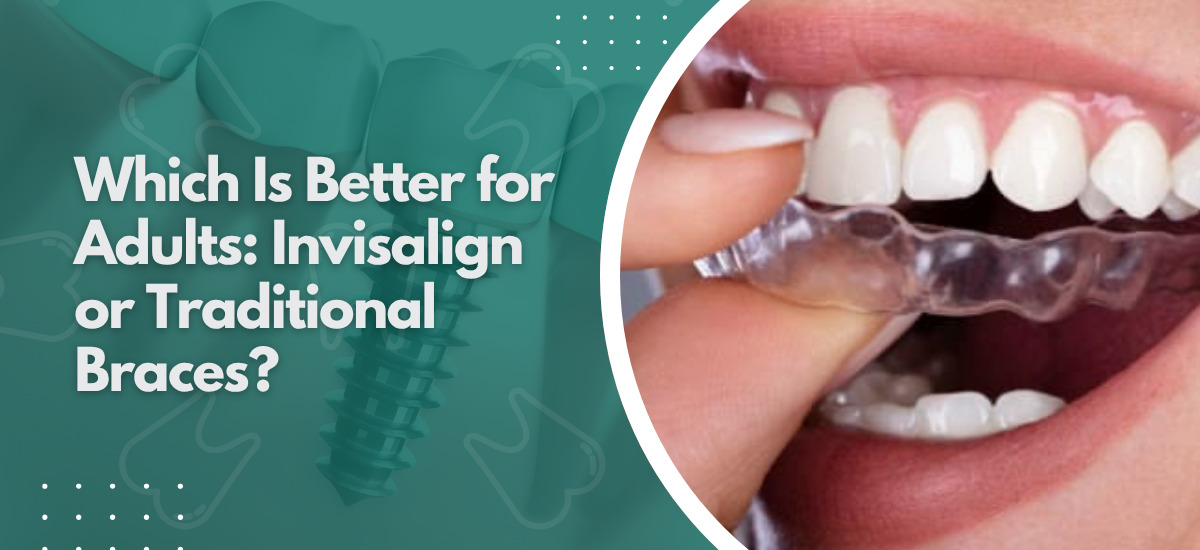
Invisalign uses removable clear plastic aligners that are nearly invisible and can be removed for eating and cleaning, while traditional braces use fixed metal or ceramic brackets bonded to teeth with wires applying constant pressure. Invisalign is most effective for mild to moderate alignment issues with average treatment duration of 12-18 months, whereas traditional braces handle severe crowding, complex rotations, and bite corrections more effectively in 18-24 months, requiring evaluation from a dentist in Noida to determine which system suits your specific case and lifestyle priorities.
Dr. Suhrab Singh, best dentist in Noida with extensive orthodontic experience at Neo Dental Care, breaks it down:
“Adult patients walk in wanting Invisalign ’cause they hate the thought of metal mouth for two years, but here’s the reality Invisalign works amazing for mild spacing, minor crowding, or simple bite tweaks where you need predictable straightforward tooth movement. Traditional braces though? They handle brutal complex cases Invisalign can’t touch severe rotations, closing extraction gaps, fixing major overbites or underbites needing serious jaw repositioning. The choice ain’t just aesthetics versus effectiveness it’s compliance too. Invisalign demands wearing aligners 22 hours daily removing them only for meals, slacking off extends treatment forever or fails completely. Braces work 24/7 regardless whether you’re disciplined or not, guaranteed progress every adjustment.”
Invisalign or braces? Choose the right smile solution at Neo Dental Care today.
What Are the Key Differences Between Invisalign and Braces?
Both orthodontic systems straighten teeth but they work completely differently with vastly different characteristics affecting treatment experience and outcomes.
Comparison Factor | Invisalign | Traditional Braces |
Appearance | Nearly invisible clear thermoplastic aligners | Highly visible metal brackets and wires; ceramic brackets offer improved aesthetics |
Removability | Removable for meals and oral hygiene | Fixed appliances bonded for entire treatment duration |
Dietary Restrictions | None; removed during eating | Avoid hard, sticky, and crunchy foods |
Oral Hygiene | Normal brushing and flossing after aligner removal | Requires specialized cleaning around brackets and wires |
Treatment Mechanics | Sequential aligners changed every 1-2 weeks with programmed tooth movement | Periodic wire adjustments applying continuous force; monthly orthodontist visits |
Attachment Requirements | Small tooth-colored composite attachments for aligner retention | Metal or ceramic brackets with archwire engagement |
Force Application | Light intermittent forces from aligner pressure | Continuous force from wire tension in multiple directions |
Treatment Duration | 12-18 months average for mild-moderate cases | 18-24 months standard; 24-30 months for complex cases |
Predictability | Digital treatment plan shows predicted outcome upfront | Progress-dependent adjustments with less predictable timeline |
Compliance Dependency | High; requires 22 hours daily wear | Low; fixed appliances ensure continuous treatment |
Best For | Mild-moderate crowding, spacing, minor malocclusion | All severity levels including complex rotations and severe malocclusion |
- Appearance and Visibility
Invisalign’s clear plastic aligners are nearly invisible from conversation distance – most people won’t notice you’re wearing them unless they’re staring at your teeth up close. The aligners fit snugly over teeth looking like thin transparent shells. Traditional metal braces broadcast loudly with silver brackets and wires showing every time you smile or talk. Ceramic braces use tooth colored brackets blending better but still have visible metal wires. For adults self conscious about appearance in professional or social settings, Invisalign’s discretion wins hands down. - Removability and Lifestyle Impact
Invisalign aligners pop out for eating, brushing, flossing you eat whatever you want with zero food restrictions, clean teeth normally without navigating around brackets and wires. The removability also means taking them out for important meetings, photos, or special events. Traditional braces stay glued to your teeth 24/7 for entire treatment you avoid hard crunchy foods that might break brackets, sticky foods that might pull brackets off, struggle flossing around wires with special threaders. The fixed nature guarantees compliance but limits dietary freedom. - Treatment Mechanics
Invisalign moves teeth through programmed sequential aligners each aligner shifts teeth slightly, you switch to next aligner every 1-2 weeks continuing progressive movement. The movement happens from aligner pressure against teeth plus small tooth-colored attachments bonded to teeth giving aligners grip points. Traditional braces move teeth through wire tension orthodontist tightens wires or changes wire thickness at monthly adjustments applying constant force. The wires can apply stronger forces in multiple directions simultaneously handling complex movements Invisalign struggles with. - Treatment Duration and Predictability
Invisalign treatment averages 12-18 months for straightforward cases with entire treatment planned digitally upfront showing predicted final result. You see how many aligners total, estimate completion timeline. Traditional braces typically run 18-24 months for standard cases, sometimes 24-30 months for severe complex corrections. The timeline’s less predictable since adjustments happen monthly based on actual progress versus predetermined aligner schedule.
Understanding these core differences helps weigh which system matches your priorities. Getting checked at a solid dental clinic determines whether your bite and alignment issues fall within Invisalign’s capabilities or need traditional braces’ mechanical advantages, discusses realistic timelines and costs for your specific case.
Not sure whether clear aligners or braces suit you? Book a consultation at Neo Dental Care.
When Should Adults Choose Invisalign Over Traditional Braces?
Certain situations make Invisalign the smarter pick while other scenarios tip toward traditional braces depending case complexity and lifestyle factors.
Comparison Factor | Invisalign | Traditional Braces |
Visibility | Nearly invisible clear aligners | Highly visible metal/ceramic brackets |
Removability | Remove for eating, cleaning, events | Fixed 24/7, cannot remove |
Treatment Time | 12-18 months average | 18-24 months average |
Cost | ₹80,000-₹1,50,000 | ₹25,000-₹80,000 |
Complexity Handled | Mild to moderate cases | All severity levels including complex |
Compliance Required | High – wear 22 hours daily | Low – works regardless |
Dietary Restrictions | None, remove to eat | Avoid hard, sticky, crunchy foods |
Oral Hygiene | Easy, brush/floss normally | Difficult, special cleaning needed |
Comfort | Smooth plastic, minimal irritation | Wires/brackets can irritate |
Adjustments | Self-change aligners every 1-2 weeks | Monthly orthodontist visits |
Best For | Mild crowding, spacing, minor bite issues | Severe rotations, extractions, complex bites |
- Mild to Moderate Alignment Issues
Invisalign handles minor crowding affecting 2-4mm, small gaps between teeth, slight rotations under 20 degrees, minor bite discrepancies. If your teeth are mostly straight needing minor tweaking versus major repositioning, Invisalign delivers excellent results matching braces outcomes. Digital treatment planning shows predicted final smile upfront giving confidence in results. - Professional Appearance Priority
Adults in client facing careers sales, law, consulting, media where professional appearance matters huge benefit from Invisalign’s invisibility. You straighten teeth without looking like teenager with metal mouth during important meetings or presentations. The discretion justifies higher cost for many professionals where image impacts career advancement or client relationships. - Active Lifestyle or Contact Sports
Athletes playing contact sports remove Invisalign aligners during games avoiding mouth injuries from impact. Traditional braces create injury risk brackets cutting lips or cheeks during contact, emergencies needing urgent orthodontist visits fixing broken brackets or poking wires. Musicians playing wind instruments also prefer Invisalign’s removability versus braces interfering with embouchure. - High Compliance and Discipline
Invisalign demands religious 22-hour daily wear removing only for meals and cleaning. Disciplined adults who’ll actually wear aligners consistently get great results. Folks who’ll forget wearing them, take them out frequently for snacks or social situations, or lose aligners should pick braces eliminating compliance variable guaranteeing progress regardless discipline level.
Weighing these factors honestly maps the smartest choice. Neo Dental Care offers both Invisalign and traditional orthodontic options, uses digital scanning and treatment simulation, provides realistic assessment whether Invisalign handles your case or braces are necessary, coordinates with experienced orthodontists ensuring optimal results, offers treatment plans with financing making either option affordable.
Why Choose Neo Dental Care for Adult Orthodontics?
Dr. Suhrab Singh runs Neo Dental Care with 12+ years experience, NABH accreditation, comprehensive orthodontic assessments, digital treatment planning showing predicted outcomes, both Invisalign and traditional braces available, honest evaluation whether Invisalign suits your case or braces needed. Adult orthodontics transforms your smile and confidence.
Call +91 97557 12732 and let our team assess your alignment, explain realistic options and timelines, help you choose the system delivering best results for your situation and lifestyle.
Want a confident smile but unsure of the best option? Compare Invisalign and braces at Neo Dental Care.
Frequently Asked Questions
For mild to moderate cases yeah, but severe rotations, extraction cases, or complex bite corrections need traditional braces delivering stronger forces and better control.
Invisalign runs ₹80,000-₹1,50,000 versus traditional braces ₹25,000-₹80,000, higher cost reflects technology and convenience though treatment complexity affects both pricing.
Yeah if Invisalign isn’t delivering expected movement, though it wastes money already spent on aligners, better getting proper assessment upfront determining right system.
Treatment speed depends on case complexity not system choice – simple cases finish faster regardless which method, complex cases take longer with either approach.
References
- American Association of Orthodontists. (2023). “Adult Orthodontic Treatment Options.” AAO Patient Resources. Available at: https://www.aao.org
- National Institute of Dental and Craniofacial Research. (2024). “Orthodontics for Adults.” NIDCR Clinical Guidelines. Available at: https://www.nidcr.nih.gov