
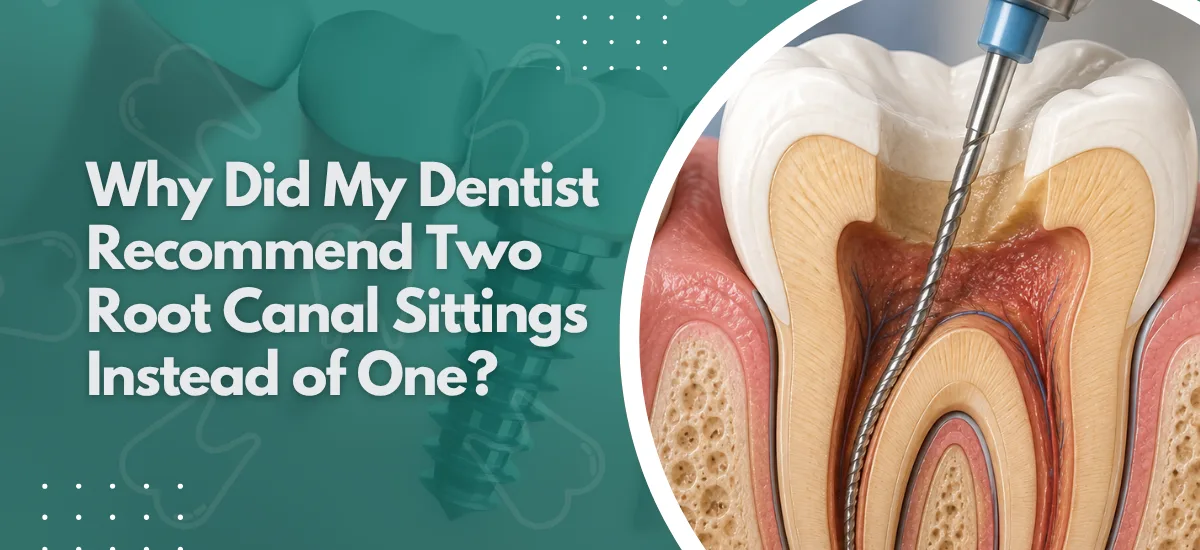
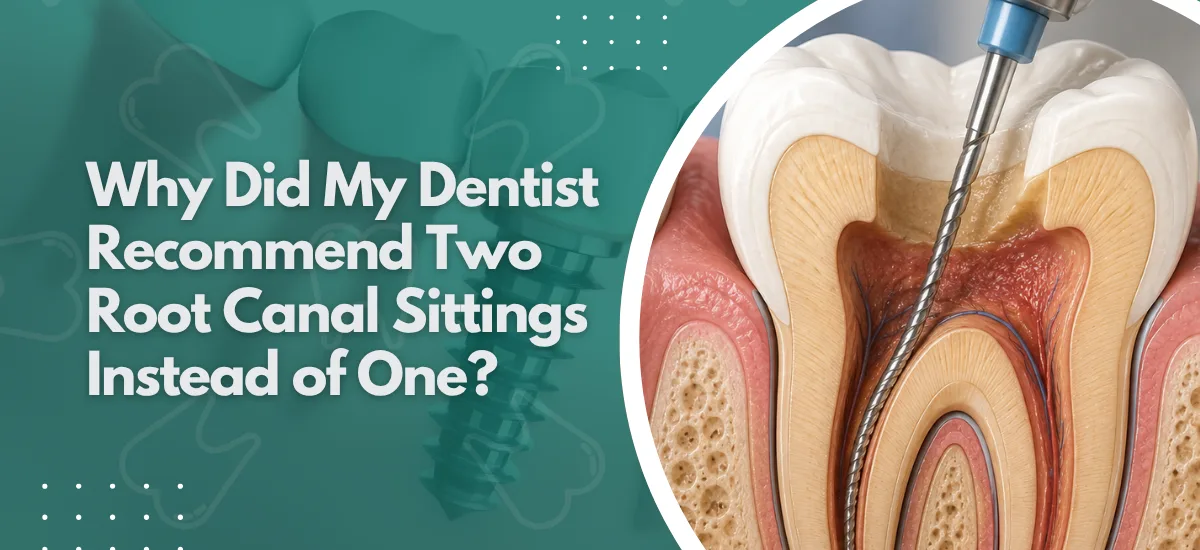
A second sitting usually comes down to one of a few specific situations, a severe infection that needs thorough cleaning, active swelling or pus that hasn’t settled yet, or root canals with an unusual curve or shape that take longer to treat safely. Splitting the treatment across two visits also allows the dentist to place antimicrobial medication inside the canal and let it work before sealing the tooth. None of this means the case is more serious than a routine root canal, only that the tooth needs a bit more time to respond before treatment can be safely completed. The decision is made chairside, based on what the dentist actually finds once the canal is open.
According to Dr. Suhrab Singh, one of the Best Dentist in Noida, “Most of our root canals are completed in a single sitting, and patients often expect all of them to work that way. When I recommend two, it’s usually because there’s active infection or swelling that needs to settle first, or the canal anatomy is more complex than a standard case. Rushing that into one visit doesn’t benefit the patient if it compromises how well the tooth heals.”
What Makes a Dentist Choose Two Sittings Over One?
A few specific findings during treatment typically drive this decision.
Severe or spreading infection: When there’s significant bacterial load in the canal, cleaning it thoroughly in a single visit isn’t always realistic. A second visit allows the medication placed between appointments to reduce the infection further.
Active swelling or pus drainage: If the tooth is still draining or the surrounding tissue is swollen, sealing it immediately can trap pressure inside. Waiting for that to settle first is safer.
Curved or unusually shaped canals: Some canals branch or curve sharply, which takes longer to clean and shape properly. Rushing this step raises the risk of a missed canal or incomplete cleaning.
Uncertain diagnosis at the first visit: Occasionally the extent of the problem only becomes clear once the canal is opened, which changes the plan mid treatment.
This gets decided case by case, based on exactly what the dentist finds once treatment begins, rather than assumed in advance.
Does a Two Sitting Root Canal Mean a Worse Outcome?
Not at all. The number of visits reflects the case, not the quality of the result.
Healing outcomes are comparable: Research comparing single and multiple visit root canal treatment generally shows similar long term success rates between the two approaches when each is used for the right case.
Intracanal medication supports healing: Calcium hydroxide and similar medications placed between visits have a well documented antimicrobial effect that helps resolve infection before the canal is permanently filled.
It’s a clinical decision, not a shortcut: A dentist choosing two visits isn’t taking longer for convenience. It’s usually the safer route for that specific tooth.
Symptoms often improve between visits: Many patients notice reduced pain and swelling by the second appointment, which is a sign the interim treatment is working as intended.
For context on how the alternative works, our post on how single sitting root canal treatment works breaks down the procedure step by step for cases that do qualify for one visit.
Why Choose Dr. Suhrab Singh for Root Canal Treatment in Noida?
Dr. Suhrab Singh has performed over fifteen thousand root canal treatment in Noida procedures across more than twelve years of practice, holds an MDS qualification, and received the National Quality Achievement Award for Best Dentist in Noida in 2020.
Every root canal case is assessed individually before deciding on one visit or two, based on infection severity and canal anatomy rather than a fixed protocol applied to every patient. Call +91 9818872732 to book your consultation.
Frequently Asked Questions
Not necessarily. It often just means the canal needs more time to clean thoroughly.
No, pain levels between the two approaches are generally similar in clinical studies.
An antimicrobial medication is placed inside the canal to reduce bacteria before sealing.
Sometimes, but only if it is clinically safe. The dentist decides based on what they find.
Disclaimer
This blog is for educational purposes only and is not a substitute for a professional dental evaluation. Speak with your dentist about why a specific treatment plan was recommended for your case.