
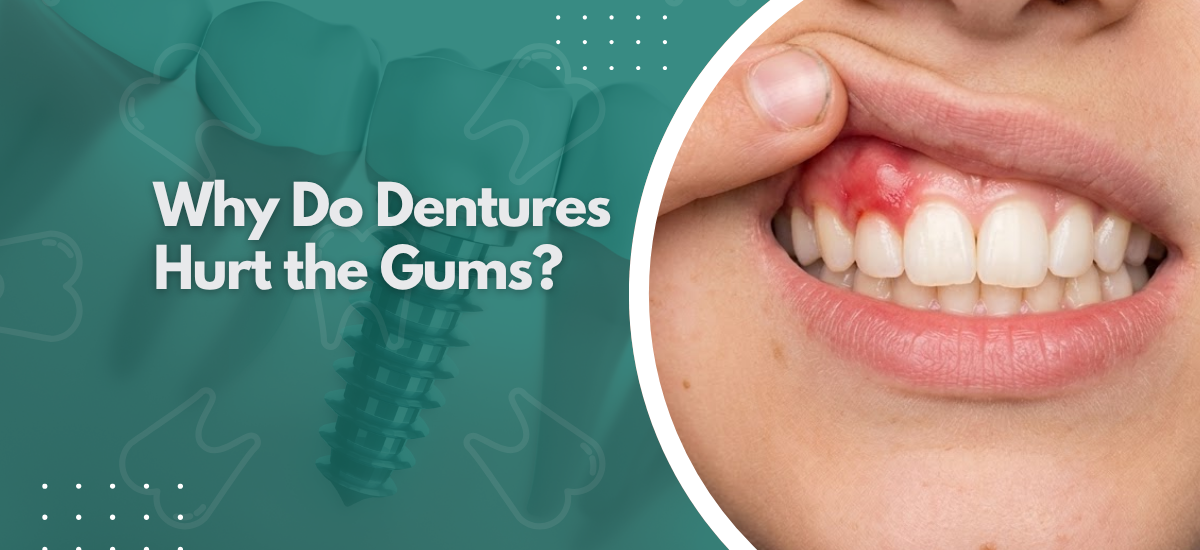
Dentures hurt for three main reasons: an improper fit, the natural shrinking of the jawbone over time, or a fungal infection called denture stomatitis. Some discomfort in the first few weeks after getting new dentures is a normal part of adjustment, the gums are adapting to a foreign appliance. But pain that lingers, creates sores, or returns after a pain-free period is not something to wait out. It has a cause, and that cause is almost always fixable.
According to Dr. Suhrab Singh, a dentist at Neo Dental Care, the best dental clinic in Noida, “A denture that hurts is a denture that does not fit. Either it never fitted properly, or the bone underneath has changed and the denture has not kept up. Most denture pain is fixed in one appointment. Nobody should be managing daily gum pain from a denture and calling it normal.”
Dentures causing discomfort? Book an adjustment appointment with Dentsit
What Are the Main Causes of Denture Pain?
The reason a denture hurts matters because each cause has a different solution. A table helps separate them quickly.
|
Cause |
What Happens |
What It Looks Like |
Solution |
|
Poor fit or pressure points |
The denture base presses unevenly on the gum tissue |
Localised sore spots, redness under the denture |
Chairside adjustment in one visit |
|
Jawbone shrinkage |
Bone resorbs after tooth loss, changing gum ridge shape |
Loose denture, general gum soreness, difficulty chewing |
Relining or new denture |
|
New denture adjustment |
Gums adapting to an appliance they have not worn before |
Mild widespread soreness, improves week by week |
Time, minor adjustments as needed |
|
Denture stomatitis |
Candida fungal overgrowth under the denture surface |
Red, inflamed palate or gum, burning sensation |
Antifungal treatment, denture hygiene review |
|
Allergic reaction |
Sensitivity to acrylic resin or metal components |
Diffuse redness, burning without obvious sore spots |
Material change, specialist assessment |
|
Overnight wear |
Extended wear without rest raises tissue inflammation |
Morning soreness, accelerated gum irritation |
Remove dentures at night consistently |
Poor fit is by far the most common cause, and at Neo Dental Care every denture adjustment starts with a full intraoral assessment to confirm exactly where the pressure is sitting before anything is modified which is why patients with long-standing gum soreness from their dentures in Noida leave with a precise adjustment rather than a guess.
When Is Denture Pain Normal and When Does It Need Attention?
Not every discomfort means something is wrong. But there is a clear point where normal adjustment ends and a problem begins.
- Normal in the first 2 to 4 weeks: Mild, generalised gum soreness when first wearing a new denture is expected. The tissue is adjusting to constant contact with a new appliance. This typically settles with minor chairside adjustments at follow-up appointments and does not require any alarm.
- Not normal beyond 4 to 6 weeks: Pain that persists or worsens after the adjustment period, develops into visible sores, produces bleeding, or creates difficulty eating is not part of normal adaptation. It indicates a fit problem, an infection, or both and waiting does not improve it.
- Bone loss and the long-term fit problem: The jawbone starts shrinking within weeks of teeth being lost, and it never stops entirely. Studies show residual bone resorption continues for years, progressively altering the shape of the gum ridge. A denture made five years ago fit a jaw that no longer exists. This is why relining adding material to the fitting surface to restore contact is a routine part of denture maintenance, not a sign that something went wrong.
- Denture stomatitis — the missed diagnosis: Studies report denture stomatitis affects 20 to 67% of denture wearers globally, yet many patients are unaware they have it. The Candida infection thrives under the fitting surface, particularly in patients who wear their denture overnight. Gum redness, a burning sensation, and a palate that looks persistently red or velvety are the signs. Antifungal treatment resolves it, but without addressing denture hygiene and overnight wear, it returns.
Untreated tooth loss is also what sets this sequence in motion the bone resorption that makes dentures painful years later begins the moment a tooth is removed and the socket is left with nothing to stimulate it, and how quickly this happens is explained in our blog on what happens if you don’t replace a missing tooth.
Why Choose Dr. Suhrab Singh at Neo Dental Care?
Dr. Suhrab Singh leads the denture and prosthetics programme at Neo Dental Care, Noida NABH-accredited, located within Neo Hospital, Sector 50. The clinic provides full and partial dentures, flexible dentures, implant-supported dentures, and immediate dentures, with digital scanning for precise impressions and chairside adjustment at every recall visit. Patients with painful or poorly fitting existing dentures receive a full intraoral assessment before any modification is made, and relining or replacement decisions are based on clinical findings rather than routine schedules.
Frequently Asked Questions
The jawbone shrinks gradually after teeth are lost, changing the shape of the gum ridge. Dentures that fitted well initially become loose and rub as this happens. Most patients need relining or replacement every 5 to 8 years as the bone continues to change.
A fungal infection caused by Candida overgrowth under the denture surface. It produces red, inflamed gum tissue and sometimes a burning sensation. Strongly associated with wearing dentures overnight and poor denture cleaning.
Some soreness in the first 2 to 4 weeks is normal as the gums adjust. Pain beyond 4 to 6 weeks, visible sores, or worsening discomfort is not normal and needs a professional review.
Yes. Most pressure-related pain is resolved with chairside adjustment in one appointment. Significant bone loss may require relining or a new denture to restore proper fit.
Reference:
- https://pmc.ncbi.nlm.nih.gov/articles/PMC9482451/
- https://pmc.ncbi.nlm.nih.gov/articles/PMC11122031/
Desclaimer:
This blog is for informational purposes only and does not constitute professional dental advice. Please consult a qualified dental professional for a diagnosis and personalised treatment plan.