
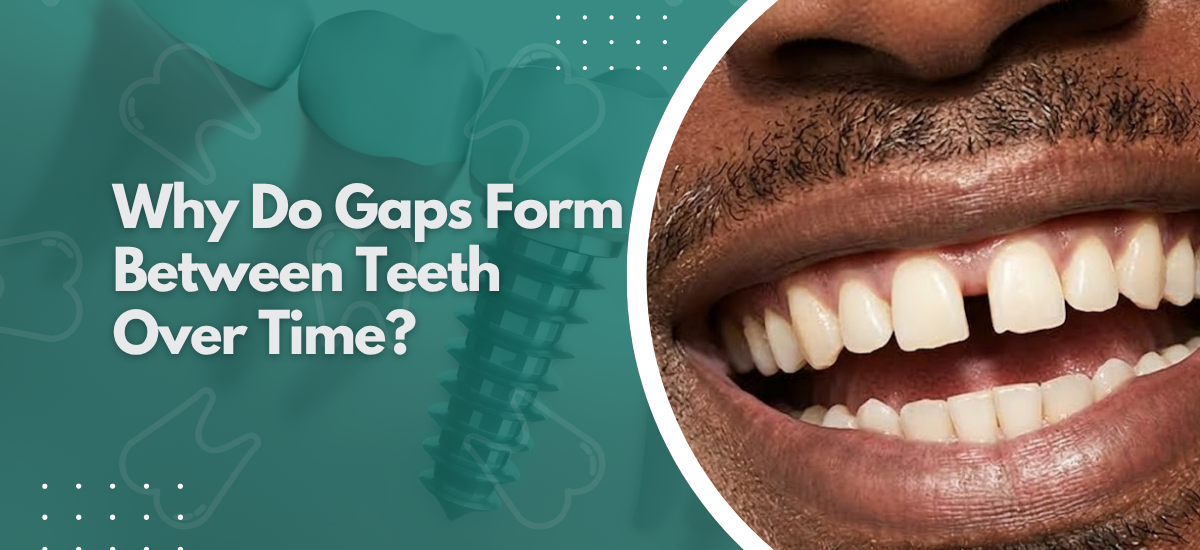
Gaps between teeth usually form because something has shifted. The main reasons are missing teeth that were never replaced, advanced gum disease weakening the bone that holds teeth in place, or prolonged habits like grinding and tongue thrusting. When the supporting bone and tissue get altered or start to shrink, teeth drift out of their original positions. Some gaps are there from birth. But new ones that appear in adulthood gaps that were not there before are almost always a sign that something underneath has changed.
According to Dr. Suhrab Singh, a dentist at Neo Dental Care,One of the best dental clinic in Noida, “A gap that appears in your forties or fifties did not just happen overnight. There has been a process running for years: a missing tooth nobody replaced, bone loss from gum disease, or years of grinding pushing the front teeth forward. Closing the gap without addressing the cause just means it opens again.”
New gaps appearing or existing ones getting wider? Book an assessment with a dentist.
What Causes Gaps to Form Between Teeth?
The cause determines the right treatment. Getting this wrong closing a gap without addressing what opened it produces a result that does not last.
- Missing teeth left unreplaced: A tooth root in the jaw does two jobs. It handles biting force and it stimulates the bone around it. When that root disappears, the bone starts shrinking and the neighbouring teeth no longer have anything holding them in position from the side. They tilt. The opposing tooth starts over-erupting. Within months the surrounding teeth have begun drifting into the space, creating new gaps where there were none and changing the bite across the whole arch.
- Advanced gum disease: Periodontitis destroys the alveolar bone the bone that holds each tooth root in place. As that bone is lost, teeth loosen, drift, and create gaps that were never there before. This is one of the most common reasons adults notice new spacing in their front teeth in their forties and fifties. The teeth are not growing apart. The support underneath them is disappearing. Treating the gum disease has to come before any gap closure is attempted.
- Grinding and clenching: Bruxism places repeated lateral forces on the teeth rather than straight vertical bite forces. Over years, this pressure pushes the front teeth outward and forward, gradually creating flaring and spacing in the upper front teeth in particular. Patients with bruxism-related gaps often also have worn, flattened back teeth and morning jaw stiffness.
- Tongue thrusting habit: When the tongue pushes against the front teeth repeatedly during swallowing rather than resting on the palate, the constant low-level pressure pushes those teeth forward over time. It is a common cause of a gap between the two upper front teeth in children that persists or worsens into adulthood if the habit is not addressed.
How teeth shift and what happens to the jaw bone when a gap is left untreated over months and years is covered in detail on our aligners and braces treatment in Noida page, including the treatment options available for different types of spacing.
How Are Gaps Between Teeth Treated?
The right treatment depends entirely on what caused the gap. There is no single answer that works for every case.
- Composite bonding: For small cosmetic gaps between front teeth where the underlying cause is just natural spacing, composite resin can be applied directly to the tooth edges and shaped to close the gap in a single visit. It is reversible and conservative. It works well for minor gaps not for spacing caused by drift, bone loss, or missing teeth.
- Clear aligners or braces: Moderate spacing that resulted from natural tooth size and jaw size mismatch, or mild drift, responds well to orthodontic treatment. Clear aligners close gaps gradually over months. Fixed braces handle more complex spacing patterns including cases where multiple teeth have drifted out of position. Neither works if active gum disease is present that gets treated first.
- Implants for missing teeth: When a gap opens because a tooth was lost and never replaced, an implant restores the missing root, stops bone loss, and eliminates the space. It also stabilises the neighbouring teeth that have been drifting. Placing an implant years after the tooth was lost often requires bone grafting first because the jaw has already shrunk at that site.
- Gum disease treatment before anything else: Any gap caused by periodontitis needs periodontal treatment scaling, root planing, and sometimes surgical intervention before any restorative or orthodontic work is started. Closing a gap over active bone disease means watching it reopen as the disease continues underneath.
The full consequences of leaving a missing tooth unreplaced including how quickly the surrounding teeth shift and what it takes to fix it later are covered in our blog on what happens if you don’t replace a missing tooth.
Why Choose Dr. Suhrab Singh at Neo Dental Care?
Dr. Suhrab Singh is an MDS-qualified dental specialist at Neo Dental Care, Noida, National Quality Achievement Award recipient for Best Dentist in Noida 2020.Patients presenting with new or widening gaps receive a full assessment covering bite analysis, gum health, bone levels, and missing tooth status before any treatment is recommended. Composite bonding, aligners, braces, implants, and gum treatment are all available in-house which means the right combination gets planned as a single coordinated treatment rather than piecemeal procedures from different clinics.
Frequently Asked Questions
Missing teeth, bone loss from gum disease, and habits like grinding are the main drivers. Once the support structure underneath weakens or changes, teeth stop staying put.
It can and often does. The bone holding each root in place gets destroyed as periodontitis advances. Teeth loosen, drift, and spaces open up. Sometimes the gap is the first sign the patient notices.
Depends on the gap. Small cosmetic ones bonding works fine, single visit. Moderate spacing usually responds to aligners. Anything involving drift, bone loss, or a missing tooth needs a proper clinical plan before treatment starts.
Almost always, if nothing is done about the cause. The tooth keeps drifting. The bone keeps resorbing. What started as a small space becomes a bigger one with more shifted teeth around it.
Reference:
- https://pmc.ncbi.nlm.nih.gov/articles/PMC9067601/
- https://pmc.ncbi.nlm.nih.gov/articles/PMC10044990/
Desclaimer:
This blog is for informational purposes only and does not constitute professional dental advice. Please consult a qualified dental professional for a diagnosis and personalised treatment plan.