
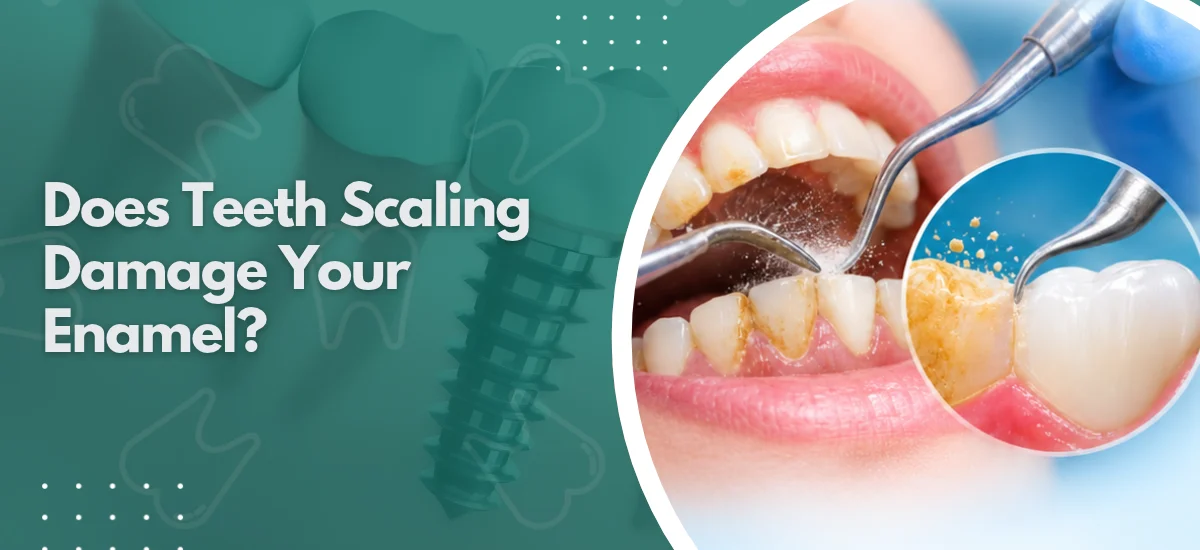
The scraping sound during scaling worries a lot of people, but healthy enamel isn’t what is being scraped. The crust that comes off is tartar and stain sitting on top of the tooth, and enamel is far tougher than both.
According to Dr. Suhrab Singh, Dentist in Noida, “Scaling removes what is stuck on the tooth, not the tooth itself. Enamel is harder than tartar, so a trained hand can lift deposits without wearing it down.”
What Does Teeth Scaling Actually Remove?
A toothbrush can’t shift hard deposits, which is why scaling exists. It also helps to know what comes off, since that explains why the tooth stays intact.
- Plaque: Plaque is a sticky film of bacteria that builds up within hours of brushing. Whatever is missed starts to harden.
- Tartar: Plaque left behind hardens into tartar, also called calculus, and brushing won’t budge it. Only scaling lifts it.
- Surface Stains: Tea, coffee and tobacco stain the tartar and the enamel brown. Most of this stain comes off during the clean.
- Bacteria Under the Gums: Tartar also collects just under the gumline and irritates the gums. Clearing it is what stops them bleeding.
Newer methods use air and fine powder instead of metal tips. This page on painless scaling with Swiss Air Flow explains how that works.
Why Does Scaling Leave Enamel Unharmed?
Nothing in the mouth is harder than enamel, and tartar is far softer. That difference lets a dentist remove one without touching the other.
- Enamel Is Harder Than Tartar: The instruments are meant to break up the deposit and nothing more. The dentist follows the edge of the tartar and stays off the tooth.
- Ultrasonic Tips Use Vibration: A vibrating tip shakes the tartar loose while water washes it away. Light contact keeps the tooth surface safe.
- Polishing Smooths the Surface: After scaling the teeth are polished with a fine paste. That leaves them smooth, so new plaque finds it harder to stick.
- Studies Show Minor Changes: Lab studies that measure enamel after scaling report only small changes in surface roughness. Polishing afterwards helps smooth them out.
Air-based scaling is gentler still. This comparison of Swiss Air Flow and regular scaling shows the difference.
How Can You Keep Scaling Safe for Your Teeth?
Safe scaling depends more on technique than on the tool. If you plan to look up teeth scaling near me, know what a careful session involves first.
- Pick a Trained Professional: A dentist or hygienist should do the scaling, in a clinic. When you look up dental scaling near me, find out who actually does the work.
- Mention Sensitivity Beforehand: Roots exposed by receding gums are softer than enamel. Tell the dentist so they can go lightly there, as that is the area most likely to feel cold afterwards.
- Don’t Overdo the Frequency: Most people need scaling once or twice a year. More often isn’t needed unless gum disease is being treated.
- Skip Home Scraping Tools: A metal pick from an online store can scratch enamel and cut the gums. It’s not worth the risk when a dentist can do the job safely in one short visit.
Cost varies with the method and the amount of tartar. This guide on how much professional teeth cleaning costs in Noida gives an idea of what to expect.
Key Takeaways: Scaling takes off plaque, tartar and stain and leaves healthy enamel alone. A day or two of sensitivity is normal, mostly near receded gums. A trained professional once or twice a year is the safe way, and home scraping tools aren’t.
Frequently Asked Questions
No. Healthy enamel isn’t removed during scaling. Teeth can feel different afterwards only because the rough tartar is gone.
Most people feel pressure or a light tingle, not pain. Sore gums or sensitive teeth can feel it more, and numbing gel is available.
Tartar sometimes covers exposed root surfaces. Once it’s gone those areas react to hot and cold for a few days.
Every six to twelve months suits most adults. Gum disease may mean more frequent visits.
Disclaimer
This blog is for educational purposes only and is not a substitute for a professional dental evaluation.