
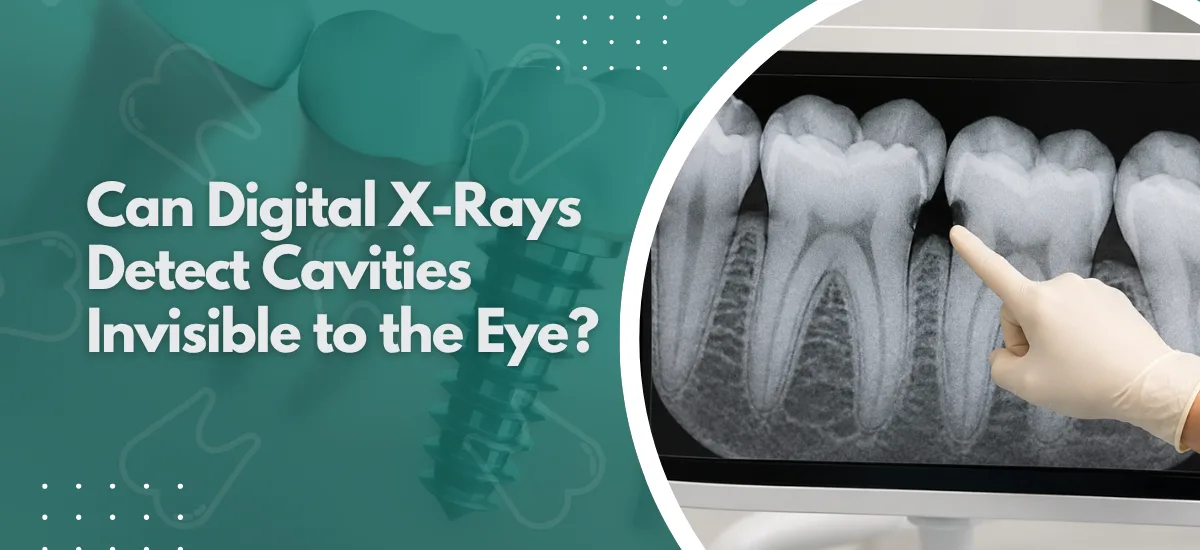
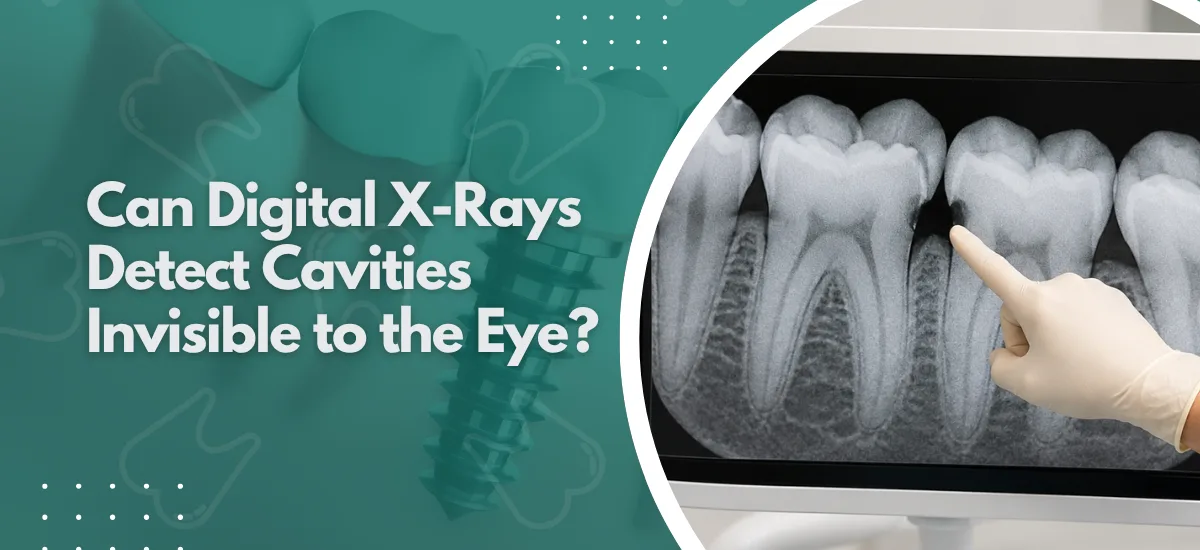
Digital X-rays routinely catch decay that a visual exam alone would completely miss. They reveal cavities forming between teeth where a dentist’s eyes simply can’t see, decay hiding underneath old fillings or crowns, and early demineralization inside the enamel long before it causes pain or shows up as a visible dark spot. This matters because by the time a cavity is visible or painful, it has usually already progressed well past the earliest, easiest to treat stage. Catching decay at that invisible stage is exactly what makes X-rays a routine part of most dental checkups rather than an occasional extra.
According to Dr. Suhrab Singh, one of the Best Dentist in Noida, “Patients are often surprised when I point out a cavity on an X-ray that they can’t see or feel at all. That’s actually the whole point. The cavities that hurt or look obvious are already advanced. The ones we want to catch are the quiet ones, forming between teeth or under an old filling, well before they become a bigger problem.”
Where Do Digital X-Rays Actually Catch Cavities a Visual Exam Misses?
A few specific locations are where this matters most.
Between the teeth: This is where visual exams fall short most often, since the contact point between two teeth is physically impossible to see directly. Bitewing X-rays are considered the standard for catching decay here early.
Underneath old fillings or crowns: Decay can develop at the edge of existing dental work, hidden entirely from view. An X-ray is often the only way to catch this before it spreads further into the tooth.
Inside the enamel, before a cavity forms: Early demineralization can be visible on an X-ray well before it becomes an actual cavity, which opens the door to non invasive treatment like fluoride instead of a filling.
Below the gumline: Decay near or under the gum tissue is another area a routine visual check simply can’t assess properly.
A dental radiology in Noida checkup can help identify these blind spots before they turn into problems that cause pain.
How Accurate Are Digital X-Rays for Catching Early Decay?
The research here is fairly well established.
Bitewing X-rays are the diagnostic standard: Clinical studies consistently show bitewing radiographs are considered the reference method for detecting decay between teeth, outperforming both visual exams and other radiograph types for this specific purpose.
Digital sensors improve on older film: Modern digital sensors allow brightness and contrast adjustments after the image is taken, which studies show can meaningfully improve how clearly early decay shows up.
No method catches everything: Even bitewing X-rays have limits, and some very early lesions can still be missed. This is why X-rays are used alongside a visual exam, not instead of one.
Radiation exposure stays minimal: Digital X-rays use significantly less radiation than older film based systems, which is part of why they’re recommended as a routine part of checkups rather than something to avoid.
For more on how different imaging types compare, our post on why a CBCT scan costs more than a regular X-ray breaks down when a more detailed scan is actually needed.
Why Choose Dr. Suhrab Singh for Dental X-Rays in Noida?
Dr. Suhrab Singh has practiced restorative and diagnostic dentistry in Noida for over twelve years, holds an MDS qualification, and received the National Quality Achievement Award for Best Dentist in Noida in 2020.
Every routine checkup includes digital X-rays as standard practice, not an optional add on, so cavities hiding between teeth or under old dental work don’t go unnoticed until they become painful. Call +91 9818872732 to book your consultation.
Frequently Asked Questions
Sometimes, if it’s visible or causing pain, but many early cavities are only caught on X-ray.
Typically once a year for most patients, though it varies based on individual cavity risk.
Yes, digital X-rays use very low radiation and are considered safe for routine checkups.
Yes, early stage decay caught on X-ray can sometimes be reversed with fluoride treatment alone.
Disclaimer
This blog is for educational purposes only and is not a substitute for a professional dental evaluation. Speak with your dentist about how often X-rays are recommended for your specific case.